Showing posts with label Art news. Show all posts
Showing posts with label Art news. Show all posts
Sunday, February 11, 2018

Friday, February 5, 2016
PAINTING THE TOWNS: Kerry James Marshall Set For Major Three-City Retrospective
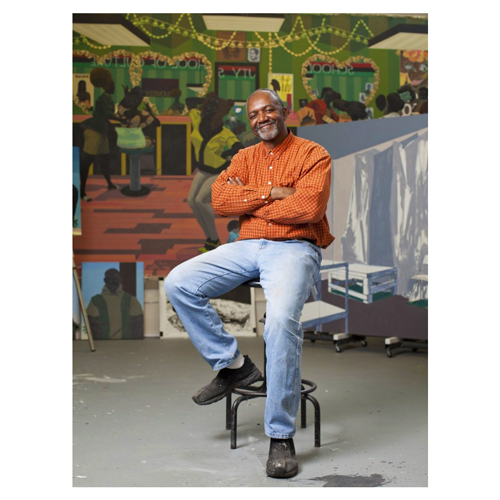
Text | Hedy Weiss for The Chicago Sun-Times
Published | January 24, 2016
In many ways, Chicago-based artist Kerry James Marshall has depicted the African American experience on canvas much as playwright August Wilson chronicled it for the theater. And beginning this spring, Marshall’s work will be seen in its first retrospective exhibition, “KJM: Mastry,” which will open at the Museum of Contemporary Art in Chicago (April 23 – Sept. 25, 2016), move on to New York’s Metropolitan Museum of Art (Oct. 25, 2016 – Jan. 29, 2017), and finally be on display at the Museum of Contemporary Art Los Angeles (March 21 – July 2, 2017).
Considered one of America’s greatest living painters, Marshall (who lives in Bronzeville with his wife, actress Cheryl Lynn Bruce) has worked at capturing the African-American experience for more than three decades, creating large-scale interiors, landscapes, and portraits that suggest narratives of African-American history from slave ships to contemporary culture. In the process, he has drawn on his deep knowledge of art history – from the Renaissance to 20th-century abstraction, making such additional sources as the comic book and the muralist tradition part of the mix. The result is a wide range of intimate scenes of black middle-class life, painted in vibrant color and with detailed patterning.
The exhibition, which will include about 70 works, will focus on Marshall’s paintings – from his seminal statement in “Portrait of the Artist as a Shadow of His Former Self” (1980), to his most recent explorations of African-American history. Organized in broadly chronological order, the exhibition will consider the dominant themes in his work: History painting, landscape, portraiture, the nude, religion, and abstraction. A selection of drawings, and works of related media such as photography, video, and sculpture, also will be on view.
Read complete article here
Tuesday, February 2, 2016
TRANSITION: Barrington Watson (1931 - 2016)
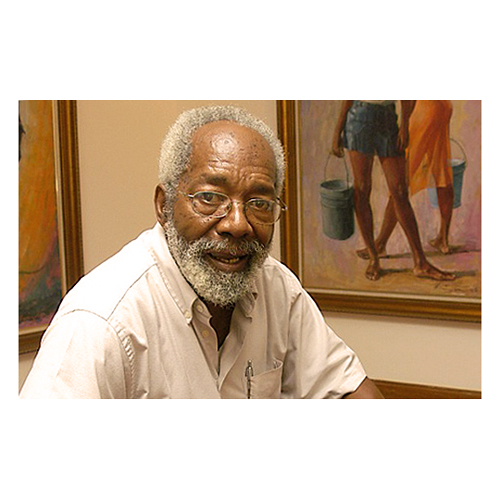
“[Jamaicans] should be more secure in our position in the world of culture. We should be taking all the art that is produced here all over the world." ~ Barrington Watson
Saturday, September 5, 2015
APPOINTED: Franklin Sirmans
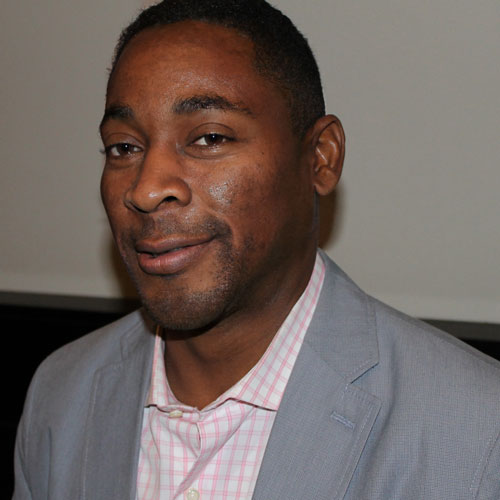 |
| Franklin Sirmans in 2012. Photo from BlackArtistNews archive. |
Franklin Sirmans named director of the Pérez Art Museum Miami: “A museum is not only a place unto itself”
Text | M. H. Miller for ARTnews.com
Published | September 4, 2015
This week, Franklin Sirmans was named the director of the Pérez Art Museum in Miami. The museum, which opened in 1984, finished a massive renovation project in 2013, with a new building designed by Swiss architects Herzog and de Meuron. Sirmans, currently the curator of contemporary art at the Los Angeles County Museum, will start his directorship next month. He’s been quite in demand over the last decade, having worked previously as a curator of modern and contemporary art at the Menil Collection in Houston, as well as serving as a curatorial advisor for MoMA PS1. Among the many blockbuster shows he’s organized is last year’s excellent Prospect triennial in New Orleans. We reached Sirmans by phone Friday morning. He had flown to Miami for a few days, and had just met with the Pérez staff.
I guess to begin, what are some of your goals as the director of the Pérez?
Well, I start in, like, a month and a half. I think first and foremost—and it’s not a long-term goal—but first is to really just absorb the archive, and to absorb the things that have happened here, from opening in 1984, to becoming a collecting museum in 1996, and now with this amazing building that’s just been open not even two years yet. So that’s the first thing. Just absorb it all, and get a deeper sense of the foundation of where the museum comes from so we understand where we’re going. Of course that entails doing a lot of talking to people and working with Tobias Ostrander, our chief curator, and thinking through those things. That’s the first goal.
Then I guess it becomes more about long-term development. I think it’s safe to say, with the building done—and it’s gorgeous and it functions—to think about ways in which you can really highlight it. It sits right on Museum Park, and you have this great meeting place, where people want to come, and want to run into people, and hopefully see something that is not only entertaining but potentially makes people think and have different experiences that are triggered by art and ideas.
Los Angeles, where you’ve been based for a while, is a kind of endlessly aspirational city, and people are constantly comparing it to something else, usually New York. L.A. is either the next New York, or it was the original New York, or whatever. So, with this in mind, how do you think Miami compares to Los Angeles?
Well, I don’t know. Two very different cities, but with a lot of similarities. I think people have applied the “is it going to be the next New York” thing in the same way [to Miami] as in L.A. We sort of have these old institutions—you think of New York, you think of Boston, and we’re talking about hundreds of years of history. But L.A., one of the cool things about working in L.A., and being a part of that, is that LACMA has only been there since 1965. So you have this incredibly fertile backdrop. You have John Baldessari right there, you have Ed Ruscha right there, telling you how they were able to stay in Los Angeles in the ’60s and make art. So there’s that very direct, primary relationship.
And here, this institution, we’re only talking about the mid-’80s. It’s another young, fast-moving place. That is, I think, a really exciting opportunity, especially to think about this place and its geographic location between North and South America, and part of the Caribbean. Having that as a backdrop is pretty amazing.
In an interview you gave with the New York Times this week, you said something interesting about the curator in the 21st century—that just being somebody who puts together shows isn’t the case anymore, and all curators are also fundraisers as well. I know you haven’t started your role as director yet, but I’m curious if you have any thoughts as to how the role of the museum director has changed as well?
I feel so fortunate having worked for [LACMA’s director] Michael Govan and having known him and seen the way he worked. And then working for someone who’s really different but also passionate—Joseph Helfenstein [the director of the Menil Collection]. So I think that the position—of course speaking from a detached sense—is more of a place where we consider what it means to be a director from the inside and the outside. And I guess that means there was a time, perhaps similar for curators, where directors could think solely about what happened inside the institution. And things like education, things like programs that happen at non-regular open hours weren’t so important.
And there were questions. How does performance play into that? How does public sculpture play into that? How does the museum work as a place that is sort of the nexus for many different kinds of institutions? Because artists are so fertile in terms of creativity and so interdisciplinary, how do we use the museum to talk about those things so we can crisscross with science, with music, with education? All of those things play a role now. And the museum can be that place where it all comes together. And I think the position involves putting forth a multidisciplinary view, like how our best artists, or the artists we admire, push ideas to new boundaries and get people to think in different ways. I think that the director has potentially become more a part of that very open process. At least from my vantage point. I think about directors I’ve seen working—I think of Thelma Golden and what she’s done with the Studio Museum. I think a museum is not only a place unto itself, it’s a place that is important to a community as a whole, and it has become even more important.
Thursday, June 12, 2014
MATERIAL WITNESS: The Changing Complex Profile of Black Abstract Painters
 |
| James Little, Juju Boogie Woogie, 2013. Image via artnews.com: Courtesy the artist and June Kelly Gallery, NY. |
Long marginalized by their community and
overlooked by the art market, African American abstractionists are finally
coming into the spotlight
Text | Hilarie M. Sheets for ARTnews
Published | June 4, 2014
“Donald
Judd didn’t have to explain himself. Why do I have to?” asks Jennie C. Jones,
an African American abstract painter who has grappled with the issue of how her
work can or should reflect her race. “Fred Sandback can make this beautiful
line and not have to have it literally be a metaphor for his cultural
identity.”
Jones, 45,
sidestepped the debates around multiculturalism that were raging when she was
in school in the 1980s and gravitated toward Minimalism. Yet over the last
decade, she has forged a conceptual link in her work between the histories of
abstraction and of modern jazz in America—“black guys in the 1950s taking jazz
into the concert hall and making it this bluesy hybrid with Bach,” as she puts
it.
In her
recent show at Sikkema Jenkins in New York, an atonal sound environment
accompanied her monochromatic paintings that had acoustic panels attached to
the canvases. Strips of fluorescent color painted on the edges of the canvases
bounced off the white walls and created a sense of movement, rhythm, and
vibration. “This art and music juncture,” she says, “gave me the permission to
point to something in the room that said, ‘I didn’t fall out of the sky.’”
The
contributions of African American artists to the inventions of abstract
painting have historically been overlooked, or else fraught with the kind of
questions faced by Jones. “Generations of black abstract painters never seem to
be celebrated,” says Valerie Cassel Oliver, senior curator at the Contemporary
Arts Museum Houston, where she recently organized “Black in the Abstract,” a
two-part exhibition that focused on the history of African American painters
working in abstraction. She placed younger artists, including Jones, Shinique
Smith, and Angel Otero, in dialogue with members of the older generation, such
as Felrath Hines, Alma Thomas, and Romare Bearden, who were producing seminal
works in the 1960s.
“You find
these artists being marginalized on both ends of the spectrum,” Cassel Oliver
continues. “There was this manifesto with the Black Arts Movement that you did
work that reflected the beauty of that community in no uncertain terms,” she
says, referring to a group that coalesced in the 1960s to promote social and
political engagement in art and literature. “Oftentimes abstract painting is
not as celebrated as more figurative work by the black community. From the
mainstream art world, it’s just the sense of not being preoccupied with what
black artists are doing, period.”
Read complete story online here.
Thursday, December 12, 2013
COVER: Nelson Mandela by Kadir Nelson / The New Yorker / December 16, 2013

From the newyorker.com, published December 5, 2013:
“I’ve recently made a children’s book about Nelson Mandela, but
for a New Yorker cover, I settled on a younger image of him
during the time that he was on trial with over a hundred of his comrades,” says Kadir Nelson about “Madiba,” his oil painting of Nelson Mandela, who died December 5, 2013, at the age of ninety-five.
“From
looking at the photos of the time, I could see that the energy around him was
very strong and that his peers were very much with and behind him,” Nelson
added. “He was clearly a leader. I wanted to make a simple and bold statement
about Mandela and his life as a freedom fighter. The raised fist and the
simple, stark palette reminded me of posters and anti-apartheid imagery of the
nineteen-eighties. This painting is a tribute to the struggle for freedom from
all forms of discrimination, and Nelson’s very prominent role as a leader in
the anti-apartheid movement.”
Nelson
continued: “Being an artist is kind of like being an actor. So as I painted
Nelson’s portrait, I felt empowered and proud like the man himself. He has long
been a personal hero of mine. I saw him speak shortly after he was released from
prison, in 1990. It was both an honor and a privilege to paint his portrait and
tell his story.”
Click here to view slide show of Kadir Nelson’s picture book, “Nelson Mandela.”
Thursday, December 5, 2013
POST: An insider's guide to Global African Art and Culture at Basel Miami Beach, 2013
.jpg) |
| Lynette Yiadom-Boakye, Switcher, 2012. Courtesy the artist and Jack Shainman Gallery, NYC. Image via artbasel.com. |
From
the grio.com, published December 4, 2013:
The absence of hurricanes so far in 2013 bodes
well for a sensational Art Basel Season.
If you plan to attend, make sure you come
prepared for a visual feast and a plethora of social and cultural
activities. The 12th edition of
Art Basel Miami Beach (ABMB) opened today (Wednesday, December 4th) at the
Miami Beach Convention Center, having firmly established itself as the premiere
art fair for Modern and Contemporary Art in the Americas.
Although there are still no black-owned
galleries represented in the main show (Miami Beach Convention Center), the
African Diaspora audience has increased significantly over the last five years.
Art Basel Salon Conversations (a signature feature of ABMB) now consistently
incorporate the perspectives of the global African Diaspora. Last year’s Salon
Conversations included contributions from Hank Willis and Adam Pendelton. This
year’s Salon will feature African American artist Rashaad Newsome, speaking on
“Post Black Art.”
The Art Basel Season will also include several
satellite events that will highlight the work of African Diaspora Artists or
will focus on issues relating to the production of Africana Art. There will be
sixteen additional Art Fairs that will include the work of African Diaspora Art.
http://artcollecting.com/miami_art_fairs.htm
The official opening of Art Basel Miami Beach
on Wednesday centered on the much anticipated opening of the new 220 million
dollar Perez Miami Art Museum (PAMM) and the highly coveted Vernissage (6pm -9pm, private invitation only) of ABMB. Tickets for the
PAMM opening are free for Dade County Residence. Invitations for the Vernissage
are challenging to come by, but are generally available through the
participating galleries or through the major sponsors of Art Basel.
The opening show at PAMM features the work of
African-Caribbean (London based), Hew Locke. The provocative installation
piece, entitled “For those in Peril on the Sea” will include the construction
of several different types of boats hanging from the ceiling in PAMM’s
commanding lobby. “With its significant links to the South Florida community,
this installation, part of Perez Art Museum Miami’s permanent collection
promises a powerful initial experience.”
African Diaspora Art is in some ways very
understated at the main show, but can be seen at some of the leading galleries
at the Miami Beach Conference Center. These galleries include Jack Shainman,
Michael Rosenfeld, Sikkema Jenkins, Tilton Gallery, Fred Snitzer, Goodman Gallery, Metro
Pictures, James Cohan Gallery, Alexander Gray and Associates, Sean Kelly
Gallery, Stephen Friedman, Victoria Miro, and Rhona Hoffman among others.
Artists to locate in the main show include, inter-alia Yinka Shonibare, Jack Whitten, Mel
Edwards, Mickalene Thomas, Lynette Yiadom-Boayke, Hank Willis Thomas, Wangechu Mutu, Jean-Michel Basquiat, Carrie Mae Weems, Kerry James Marshall, Nick Cave, Lorna
Simpson, Julie Mehretu, El Anatsui, Toyin Odutola, Leonardo Drew, David
Hammons, Romare Bearden, Theaster Gates, Chris Ofili, Kara Walker, Kehinde
Wiley, Derrick Adams, Gary Simmons, and Barkley L. Hendricks.
Ludlow E. Bailey is a cultural curator, writer and an international art broker.
Click here for list of other African centered
events on the official Art Basel Calendar
Wednesday, December 4, 2013
MEDIA NEWS: Okwui Enwezor Appointed Director of 56th Venice Biennale
 |
| Okwui Enwezor photographed by Bjorn Iooss. Image via Vogue.it. |
From
blogs.artinfo.com, December 4, 2013:
Okwui
Enwezor, director of Munich’s Haus der Kunst, has been appointed Director of
Visual Arts for the 56th Venice Biennale, which is to take place from May 9 to
November 22, 2015. The 50-year-old Nigerian-born curator and writer previously
served as artistic director of the Documenta 11 in 2002, the Bienial
Internacional de Arte Contemporaneo de Sevilla in 2006, the Gwangju Biennial in 2008, and the Triennal
d’Art Contemporain of Paris at the Palais de Tokyo in 2012. From 2005 to 2009
he was dean of academic affairs and senior vice president of the San Francisco
Art Institute.
“We … turn
to a person who has a great many experiences to his name, with an ample history
of activities and studies in a wide range of topics concerning art,” said Paolo
Baratta, chairman of the Board of Directors of la Biennale di Venezia. “Enwezor
has investigated, in particular, the complex phenomenon of globalization in
relation to local roots. His personal experience is a decisive starting point
for the geographic range of his analysis, for the temporal depth of recent
developments in the art world, and for the variegated richness of the present,”
Baratta continued.
“No event
or exhibition of contemporary art has continuously existed at the confluence of
so many historical changes across the fields of art, politics, technology, and
economics, as la Biennale di Venezia,” Okwui Enwezor stated after his
appointment. “La Biennale di Venezia is the ideal place to explore all of these
dialectical fields of reference, and the institution of la Biennale itself will
be a source of inspiration in planning the Exhibition.”
Enwezor’s
work engages in African, European, Asiatic, North and South American art of the
20th and 21st Century, in modern and contemporary art of the African countries
and the contemporary art of the African diaspora.
Enwezor
follows Italian curator Massimiliano Gioni, whose 55th Biennale and critically
acclaimed exhibition “The Encyclopedic Palace” ended in November with over
475,000 visitors.
Subscribe to:
Posts (Atom)