Showing posts with label Contemporary Art. Show all posts
Showing posts with label Contemporary Art. Show all posts
Sunday, February 11, 2018

Monday, April 25, 2016
BOSTON: Radcliffe Bailey
 |
| Radcliffe Bailey, Notes from Tervuren, 2014, gouache, collage, and ink on sheet music, 22 3/8 x 18 7/8 x 1 1/2 inches (framed). Image via cacno.org. |
Being Imperceptible
April 1 - May 28, 2016
SAMSØÑ
450 Harrison Avenue
Boston, MA
Text by Kevin Sipp via cacno.org:
RADCLIFFE BAILEY'S work collectively builds an alternate history of transatlantic slave narratives, accounts and histories of culture, science, and art making; histories that ask the perennial ‘what if’ questions that haunt human history. How we process stolen legacies, devalued humans, unrecognized aesthetic practices and balance their retelling through the lens of modernism and post modernist angst will keep all, us (and them) busy for years to come. No matter the weight of the subject, Bailey finds a way to bring the wonder of freedom to the table. His aesthetic drapetomania pushing our eyes forward, past nostalgia into two and three-dimensional stagings that interrogate the past and present all at once. West African ritual mark making, Dadaist and Surrealist technique, the ghosts of Negritude and Harlem Renaissance aspirations, Expressionist abstractions coupled with cosmic and free jazz influences, folk and funk art, revising stories, retention and contemporary innovations all maneuvered into place; a well staged ensemble propelling conversations around the valuation and re-evaluation of African minds, bodies, and myths.
Radcliffe Bailey's luminous series Notes from Tervuren is a fine example of his unconventional historical narration. Paint applied like sacrificial fluids amid an orchestra of collaged floating signs and sacred symbols wrapped around collaged totems layered and lacquered on aged and weathered sheet music. In his book, Bluetopia: Visions of the Future and Revisions of the Past in the, works of Sun Ra, Duke Ellington and Anthony Braxton, Graham Lock describes music as a complementary form of history and a gateway to other realities. This idea argues music, as a creative vehicle, helped Africans in the Diaspora envision a promised land of the future and recall the memory of a promised land lost in past. The figures in the Tervuren series move, animated by centuries of waiting. Ki-Kongo Nkisi language and culture co-mingles with representations of Mende womanhood in the watery dream world of Olokun spirituality. These artifacts provide a dream of agency and autonomy, visualized as aquatic movements spanning the expansive journey, that Middle Passage, from Mythic Africa to present Diaspora through art world stylisms. Ancestral objects surrounded by chaotic rainbows echo the twilight colors of coming night and dawning day, spirits of memory evoking griots dancing mambos, ghost singers and tale tellers.
Art is one of the ways we humans keep our history, our community, our faith, our prophetic and speculative hopes alive. Art keeps the voice of our love and hate. It speaks to the blues of our glass hearts breaking. It speaks to the piecing of our Osiris selves back together. It is how we give voice to our gods and have them sign their names. It is the hoodoo child coming of age in all of us, fighting to keep a consumed, magical world populated by living myth and ever present wonder. It simultaneously keeps and transforms the narrative of history. Radcliffe Bailey’s art is an heir to a Pan African, Pan Aesthetic patchwork high culture that has consistently carried the weight of art's communal purpose. Let us all celebrate this griot's song.
Radcliffe Bailey was born in Bridgeton, New Jersey in 1968, and grew up in Atlanta, Georgia, where he currently lives and works. Bailey received a B.F.A. in 1991 from The Atlanta College of Art. His past exhibitions include, Memory as Medicine, High Museum of Art, Atlanta (2011), which traveled to the Davis Museum and Cultural Center, Wellesley College (Wellesley, MA), and the McNay Art Museum (San Antonio, TX). New/Now: Radcliffe Bailey, New Britain Museum of American Art, New Britain, CT (2004), Neo-HooDoo, curated by Franklin Sirmans and organized by The Menil Collection (Houston, TX) at the Miami Art Museum, (Miami, FL 2009), and traveled to MoMA P.S.1, (NY, NY, 2009). Bailey’s work is in the collections of the Metropolitan Museum of Art (NY. NY), the Smithsonian Museum of American Art (Washington, D.C.), the Corcoran Gallery of Art (Washington, D.C.), the Museum of Fine Arts (Houston, TX), the Nelson-Atkins Museum of Art (Kansas City, MO) and the High Museum of Art (Atlanta, GA), among others.
Wednesday, March 16, 2016
NEW YORK: Serge Alain Nitegeka
 | ||
| ||
Colour & Form in BLACK
March 17 - April 23, 2016
Opening reception: Thursday, March 17, 2016, 6:00 - 8:00pm
MARIANNE BOESKY GALLERY
506 West 24th Street
New York, NY
From Marianne Boesky Gallery e-blast:
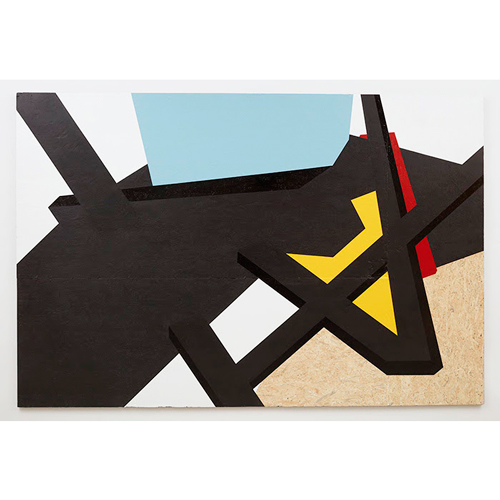
Marianne Boesky Gallery is pleased to present Colour & Form in BLACK, a solo exhibition of new paintings and sculptures by Burundi-born, Johannesburg-based artist Serge Alain Nitegeka at its flagship Chelsea location. The exhibition presents a new body of work that demonstrates the artist’s recent experimentations with form, color, and space. Colour & Form in BLACK is Nitegeka’s second solo exhibition since joining the gallery in 2014.
This exhibition presents the current trajectory of Nitegeka’s practice, in which the artist pursues a visceral and unmediated engagement with formal questions of line, color and volume. Here, Nitegeka deepens his commitment to abstraction, evoking Russian constructivism with these works’ clean, structured lines and boldly oscillating colors, compositions notably born not from forethought, but rather from the freeform aesthetic spontaneity that alights when artist and picture plane meet.
The resultant compositions – in both two and three dimensions – appeal to the viewer’s visual, tactile and spatial senses. Lines and shapes are rendered in shades of black, robin’s egg blue, ivory white, golden yellow, and deep crimson, both shaping space and denying it, framing it and setting it free. Demonstrating the artist’s ongoing move into pure abstraction, they encourage the viewer’s intuitive, aesthetic engagement, in a manner that befits the organic conditions of their own creation.
Nitegeka evokes the transcendental force and rich potential of the colour black to illustrate the ineffable essence of these works:
“The colour black is primordially predisposed to a deep, dark, mysterious simplicity. It doesn’t need to be explained, it refuses to be enlightened. It just is. However, given form and in the company of other colours, the colour black reveals itself robust and beautiful, proving itself a flat mental space void of everything yet rich in anything; a solid, ambiguous colour. The colour black is my point of departure from the unknown into the unknown. I don’t know where I am from or where I am headed. I am from the black heading back into the black.”
Serge Alain Nitegeka’s practice comprises abstract painting, sculpture, large-scale installation, and figurative drawing, repurposing modernist preoccupations with line and the picture plane to address larger cultural and political issues. Nitegeka’s work has been shown throughout South Africa, Senegal, Europe, and the United States. His first solo exhibition at Marianne Boesky Gallery, Morphings in BLACK, opened in November 2014 at the BOESKY EAST, the gallery’s Lower East Side location. In 2015, Nitegeka’s work was included in the South African Pavilion at the 56th international Art Exhibition of la Biennale di Venezia , as well as the Göteborg International Biennial of Contemporary Art, Gothenburg, Sweden. In spring 2015, he presented his largest site-specific installation to date, Structural Response II, at SCAD Museum of Art, Savannah, GA. Nitegeka (b. 1983, Burundi) currently lives and works in Johannesburg.
Sunday, March 13, 2016
NEW YORK: David Hammons

FIVE DECADES
March 15 - May 27, 2016
Opening reception: Tuesday, March 15, 2016, 5:30 - 7:30pm
MNUCHIN GALLERY
45 East 78th Street
New York, NY
From Mnuchin Gallery press release:
Mnuchin Gallery is proud to announce David Hammons: Five Decades, a career survey of David Hammons (b. 1943, Springfield, IL), the first exhibition of its kind in twenty-five years. The show, organized with Hammons’ support, will trace the evolution of the artist’s entire oeuvre from the late 1960s to the present day and build on Mnuchin Gallery’s history of collaboration with the artist, following the gallery’s presentations of new work in 2007 and 2011. Conceived by the artist himself, the installation incorporates never-before-exhibited photographs from Hammons’ personal collection documenting key works and performances throughout his career. A testament to his work’s enduring engagement with music, the artist has filled the galleries with the sounds of the koto and shakuhachi of traditional Japanese court music.
One of the most inventive and influential artists of our time, Hammons creates work that addresses the experiences of African American life and the role that race plays in American society. He began his career in Los Angeles in the late 1960s, where he was influenced by the politically charged imagery of the Black Arts Movement, the found-object assemblages of Dada, and the humble materials of Arte Povera. In his breakout body of work, the body prints of the late 1960s and early 1970s, Hammons paired life-sized depictions of his own face and figure— created by coating his skin and hair with margarine, pressing his greased body onto paper, then covering the imprint with pigment powder— with politically charged symbols, such as spades and the American flag.
By the mid-1970s, in part as a rejection of the status quo of the predominantly-white art market, he abandoned the format of two-dimensional, framed works hung flat on a wall, instead devoting his practice entirely to (often ephemeral) sculptural assemblage, installation, and performance. In these works, Hammons recycled found objects specifically associated with urban African American life— chicken bones, cheap liquor bottles, paper bags, and hair swept from the floors of black barber shops— into witty, increasingly abstract creations that subverted expectations for a work of fine art and spoke specifically to an audience traditionally barred from inclusion in the art world.
In the 1980s, after his relocation to New York, Hammons became known for his public sculptures and installations created in the streets, from materials found on the streets. Famous among these is Higher Goals (1986), a group of five, 20-30-foot tall telephone poles topped with basketball hoops and covered in mosaics of discarded beer bottle caps that were commissioned by the Public Art Fund. As in so many of Hammons works, the title and physical object worked together as a verbal and visual pun to generate meaning—in this case, an allusion to the unrealistic dream of basketball providing an escape from urban poverty, and encouragement for black youths to seek loftier goals than athletic prowess. Hammons continued to explore the theme of basketball in works like the Basketball Chandeliers and the Basketball Drawings, examples of which are on view in this exhibition.
Hammons work of the past decade, such as the Kool Aid drawings, the Tarp paintings, and the Mirrors, explore new levels of abstraction and reengage with traditional artistic means, but to unfailingly subversive ends. In the Kool Aids and Tarps, Hammons creates bright, gestural abstractions—a nod to the Modernist canon—whose lushness he then denies us, shrouding his drawings and paintings in old sheets, crumpled plastic tarps, and torn burlap lifted from construction sites. In the Mirrors, Hammons similarly obscures the baroque gilded frames of mirrors that appear straight from one of the Metropolitan’s period rooms with materials from the street, such as dirtied steel plates and torn fabric, wryly uniting two realms of the city that typically exist side by side, but never touching. They also subvert the concept of portraiture, denying the viewer the Renaissance idea of representing his own “mirror image.”
The exhibition will feature loans from both museums and private collections, and include examples from Hammons’ major series from the past five decades, including Body Prints, found-object assemblages such as the Heads, Basketball Drawings, Basketball Chandeliers, Tarps, Fur Coats, and Mirrors. Hammons’ incorporation of photographs documenting key moments throughout his career serves as a characteristically tongue-in-cheek riff on the most recent “survey” of his work— Triple Candie’s 2006 David Hammons Unauthorized Retrospective, which featured only small, cheaply printed reproductions and no actual works of art.
The exhibition will be accompanied by a fully-illustrated catalogue authored by Dr. Kellie Jones, Associate Professor in Art History and Archaeology and the Institute for Research in African American Studies at Columbia University, with an introduction by Dr. Robert Storr, former Dean of the Yale School of Art, and a contribution by Alanna Heiss, founder and former director of P.S. 1 and current founder and director of Clocktower Productions.
Please note: Due to the nature of the show, Mnuchin Gallery will not allow group tours. Also, pets or strollers will not be permitted inside the gallery during exhibit run.
Exhibit Link
Laughter and Anger: A David Hammons Retrospective
11 Things You Should Know about David Hammons Ahead of His Mnuchin Gallery Show
Laughter and Anger: A David Hammons Retrospective
11 Things You Should Know about David Hammons Ahead of His Mnuchin Gallery Show
Monday, March 7, 2016
ASPEN: Shinique Smith
 |
| Installation view: Shinique Smith, Resonant Tides, 2015. Photo by Tony Prikryl via aspenartmuseum.org. |
Resonant Tides
November 8, 2015 - September 4, 2016
ELK CAMP RESTAURANT, SNOWMASS
Vista Trail
Aspen, CO
From aspenartmuseum.org:
New York–based artist Shinique Smith combines an array of visual sources in her work. Incorporating graffiti, fashion, dance, Abstract Expressionism, and Japanese calligraphy, her practice addresses cultural and social issues around production, consumption, surplus, and waste. For the 2015–16 ski season, Smith created Resonant Tides, a new site-specific work at Elk Camp on Snowmass Mountain, continuing her exploration into the connections and values we ascribe to objects—both discarded and prized—and examining the very notion of “belonging.”
Sunday, March 6, 2016
BROOKLYN: Glenn Ligon
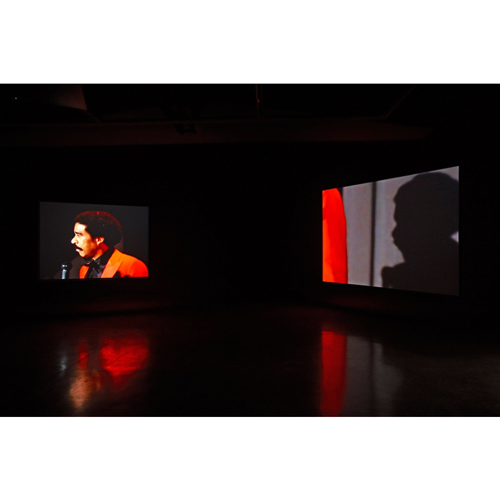 |
| Glenn Ligon, Live, 2014, (Installation view), Seven channel video, Duration: 80 minutes. Image via luhringaugustine.com. |
We Need To Wake Up Because That’s What Time It Is
January 16 - April 17, 2016
LUHRING AUGUSTINE BUSHWICK
25 Knickerbocker Avenue
Brooklyn, NY
From luhringaugustine.com:
Luhring Augustine Bushwick is pleased to present We Need To Wake Up Cause That’s What Time It Is, a new exhibition by the artist Glenn Ligon.
The exhibition features Live (2014), a silent seven channel video installation based on the 1982 film Richard Pryor: Live on the Sunset Strip. Pryor is famous for his darkly humorous and often explicit critiques of society, and Ligon has previously incorporated his standup material in a series of colorful text paintings. In Live, Ligon removes Pryor’s voice, and thereby, the incisive comedy for which he is best known. One channel depicts Pryor in full, while the other six channels each focus on a specific part of his body – his hands, head, mouth, groin, and shadow – to concentrate our attention on his animated delivery and emphatic body language. Each screen is illuminated only when that particular part of the body is visible in the original film, thus the screens flicker off and on intermittently, prompting the viewer to walk around them in order to take in the whole installation.
At a certain moment in the original Live on the Sunset Strip, Pryor discusses his tendency to grow increasingly silent when he becomes angry – “the madder I get, the quieter I get” – and his voice gives way to furious gesturing and the mouthing of obscenities, revealing the sheer physicality of his comedy. By deliberately muting his speech and fragmenting his image, Ligon compels us to see Pryor anew and focus on the non-verbal aspects of his performance – his vivid facial expressions, the perpetual motion of his delicate hands, even his bright red suit. This emphasis on the body invariably raises questions regarding social constructs of race and masculinity. Much of Ligon’s practice explores the limits of language, particularly as it relates to history and identity. Live continues in this vein by eliminating language entirely to consider how meaning is conveyed through the body, as well as conferred upon it.
Tuesday, February 23, 2016
CHICAGO: Patrick Earl Hammie
 |
Inheritance
February 25 - March 26, 2016
Artist reception: Thursday, February 25, 2016, 6:00pm - 9:00pm
Artist talk: Saturday, March 19, 2016, 2:00pm
KRUGER GALLERY CHICAGO
3709 North Southport Avenue
Chicago, IL
From krugergallerychicago.com:
Inheritance, a solo exhibition of paintings and drawings by Patrick Earl Hammie, will be on view at Kruger Gallery Chicago.
Hammie is an American visual artist best known for his large-scale portrait and figural paintings. His work draws from art history and visual culture to examine ideas related to cultural identity, masculinity, beauty, and sexuality. His paintings often use allegory to implicate power structures, and question systems of racism and sexism. Hammie is currently based in Champaign, Illinois.
As an exhibition, Inheritance presents a female and male figure locked in physical dialogue, hefting weight, and reorienting inherited expectations of ruined and objectified bodies that recall and carry on complex legacies of suffering and struggle. Informed by historical representations of Otherness, and recent shifts that locate women and people of color as central influencers of culture and politics, this exhibition provides occasion for us to encounter difference toward considering their capacity for establishing new narratives. Paintings such as Nadir feature a commanding woman rotating a reclined man’s body to his side. Constructing moments where traditionally masculine strengths (dominance) and traditionally feminine strengths (care and empathy) are conflated in the woman’s actions while the man’s body is vulnerable to public critique, Hammie introduces the woman as an active authority and relieves the man from macho performance.
Hammie was recently named an “Artist to Watch,” by the International Review of African American Art, for “producing phenomenal work that reflects their singular talent and merits our attention.” His work is a part of several collections including the Kohler Company Collection, JPMorgan Chase Art Collection, John Michael Kohler Art Center, and William Benton Museum of Art. In 2008, he received the Alice C. Cole ’42 Fellowship through Wellesley College, and in 2011, was an artist-in-residence at the John Michael Kohler Art Center. Hammie has exhibited in galleries throughout the U.S. and abroad including the Kunst in der Carlshütte in Büdelsdorf, Drawing Center in New York, and Indianapolis Art Center and has received awards from the Tanne Foundation, and Alliance of Artist Communities with the Joyce Foundation.
Hammie was born in New Haven, Connecticut in 1981. He received his BA from Coker College and MFA from the University of Connecticut. He currently serves as an Associate Professor at the University of Illinois Urbana-Champaign.
Monday, February 22, 2016
NEW YORK: Adejoke Tugbiyele
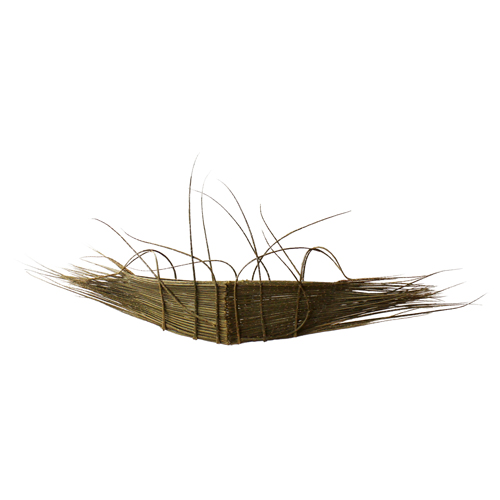 |
| Adejoke Tugbiyele, The Love Boat, 2016, palm spines, copper wire, threaded rods, 26 x 72 x 10 inches. Image via Skoto Gallery. |
Grassroots
February 25 - April 9, 2016
Artist’s reception: Thursday, February 25, 2016, 6:00pm - 8:00pm
SKOTO GALLERY
529 West 20th Street, 5th Floor
New York, NY
From Skoto Gallery e-blast:
Skoto Gallery is pleased to present an exhibition of recent works by the Nigerian-American artist Adejoke Tugbiyele. This is her first solo show at the gallery.
Adejoke Tugbiyele’s work is informed by a sophisticated discourse on traditional philosophical concepts, a deep understanding of the aesthetic and cultural character of the African continent as well as an invigorating inclination and facility with various materials and methods. By inventively handling her material within a formalist sculptural framework, combined with a highly developed experimental approach to making art, she creates work that is unorthodox, persistently innovative, and ignores boundaries between different cultural heritages and socially constructed constraints.
Tugbiyele’s sculptural process combines the weaving of fibrous materials such as palm spines around light metal structures, producing abstract figurative forms with universal elements of androgyny, armor, flight, seduction, myth and mystery. Her practice is influenced by multiple genres including ready-made/assemblage, architecture and performance/film. While her work does not openly narrate the events in her life, they are certainly rooted in her cultural, political and emotional experiences as she continuously explore strategies that fuse her aesthetic concerns with playful ironies and poetic metaphors. Despite the fact that she does not avoid the significance of content in her work, they still manage to tell stories of hope and courage, of compassion and resilience that speak to the triumph of the human spirit.
Born in Brooklyn, New York in 1977 to Nigerian immigrants, and raised for seven years in Lagos Nigeria, award-winning artist/activist Adejoke Tugbiyele boldly, yet delicately weaves complex ideas about race, gender, sexuality, spirituality and migration. Tugbiyele's work has been exhibited at reputable institutions around the world including the Brooklyn Museum, The Newark Museum, The Museum of Arts and Design, Spelman College Museum of Fine Art, The Reginald F. Lewis Museum, The Centre for Contemporary Art, Lagos Nigeria, The Goethe-Institut (in Lagos, Nigeria and Washington D.C), The Centre for Contemporary Art, Torun, Poland, and The United Nations. Tugbiyele's work is in the permanent collections of the Brooklyn Museum, The Newark Museum and in significant private collections in the United States and Hong Kong.
Adejoke Tugbiyele is the recipient of several awards including being named Foreign Policy’s 100 Leading Global Thinkers of 2015, a Fulbright U.S. Student Fellowship in 2013, the 2014 Serenbe Artist-in-Residence, the 2013 Amalie Rothschild Award, and the 2012 William M. Phillips Award for best figurative sculpture. In 2014, images of her sculptural works graced the first-ever United States publication of poetry by the African Poetry Book Fund. Her work has been mentioned and featured in numerous publications including The New York Times, The Wall Street Journal, The Huffington Post, Artsy, Financial Mail, This Day Live, The Feminist Wire, The Star Ledger, Intense Art Magazine, Africanah, Okay Africa, Art South Africa, Mail & Guardian, and ArtThrob. In 2014, she appeared on CNN International as the first openly gay woman of Nigerian heritage to come out in the media. Tugbiyele received a Bachelor of Science in Architecture from The New Jersey Institute of Technology and a Master of Fine Arts in Sculpture from Maryland Institute College of Art.
Thursday, February 18, 2016
AWARDED: High Museum of Art Names Mark Bradford 2016 Recipient of David C. Driskell Prize
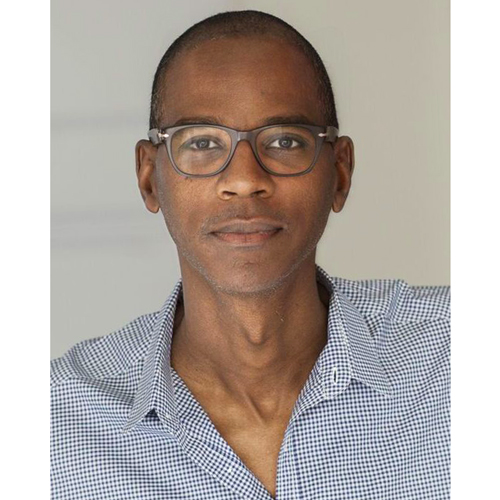 |
| Mark Bradford, 2016 Driskell Prize Recipient. |
Artist to be honored at the 12th annual Driskell Prize Dinner on April 29th in Atlanta
From High Museum of Art press release:
The High Museum of Art has named contemporary artist Mark Bradford the 2016 recipient of the David C. Driskell Prize. Named for the renowned African-American artist and art scholar, the Driskell Prize was founded in 2005 as the first national award to recognize an early or mid-career scholar or artist whose work makes an original and important contribution to the field of African-American art or art history. Bradford will be honored at the Driskell Prize Dinner at the High on Friday, April 29, 2016, at 7 p.m.
Based in Los Angeles, Bradford is known for his monumental, abstract collage works, which feature intricately layered forms and lines created using found materials such as string, carbon paper and billboard paper. In his paintings, installations and sculptures, Bradford explores how socioeconomic and political forces converge to shape the diverse culture and physical environments of urban communities. Bradford’s work has been featured in more than 40 solo exhibitions over the past two decades and is included in the collections of distinguished institutions such as The Guggenheim, the Walker Art Center and the Los Angeles County Museum of Art.
“Mark Bradford is a wonderfully important voice in contemporary art,” said Rand Suffolk, the High’s Nancy and Holcombe T. Green, Jr., director. “His work and life powerfully advocate for social change and provide poignant 21st century perspectives on the politics and psychology of human interaction. The boundary-pushing nature of his practice embodies the spirit of our annual Driskell Prize, and we’re proud to honor him in this way.”
The selection process for the 2016 recipient of the Driskell Prize began with a call for nominations from a national pool of artists, curators, teachers, collectors and art historians. Bradford was chosen from these nominations by review committee members assembled by the High, which included Andrea Barnwell Brownlee, 2013 Driskell Prize recipient and director of the Spelman College Museum of Fine Art; Valerie Cassel Oliver, senior curator of the Contemporary Arts Museum Houston; and Lauren Haynes, associate curator, permanent collection, The Studio Museum in Harlem.
The 2016 Driskell Prize Dinner is co-chaired by M. Alexis Scott and Jim Morgens with Honorary Chair Louise Sams. Tickets for the black-tie event may be purchased by contacting Rhonda Matheison atrhonda.matheison@woodruffcenter.org or 404-733-4403.
Subscribe to:
Posts (Atom)