Showing posts with label Media News. Show all posts

Sunday, February 21, 2016

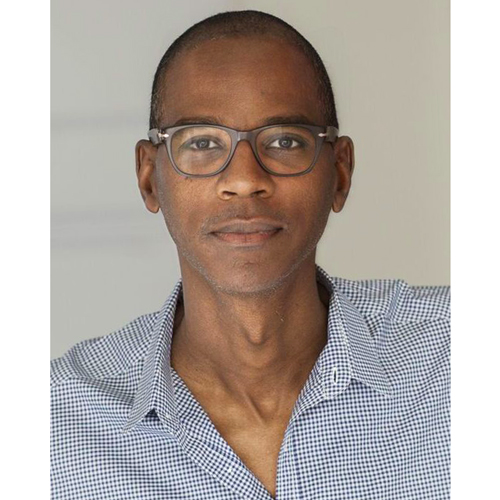
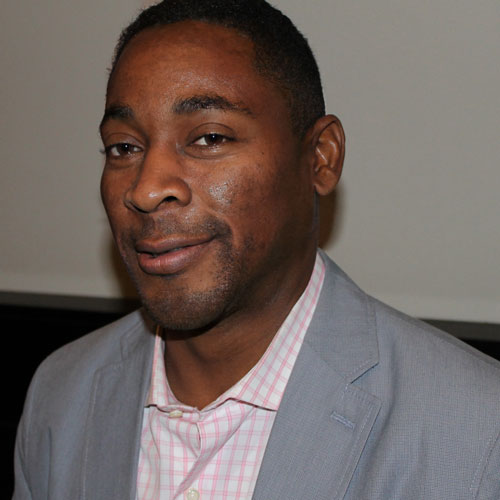
MAIN ATTRACTION: Franklin Sirmans

Franklin Sirmans, director of the Pérez Art Museum, welcomes guests and patrons during the third annual Reception for the PAMM Fund for African American Art in Miami, on Tues., Feb. 16, 2016. Photo by Pedro Portal (pportal@elnuevoherald.com) via miamiherald.com
Museum director’s star power draws crowd to Pérez Art Museum Miami

Text | Jane Wooldridge for the MiamiHerald.com
Published | February 16, 2016

Thank the star power of museum director Franklin Sirmans and the convergence of Black Tech Week at the nearby Adrienne Arsht Center for [a] stellar turnout at the Pérez Art Museum Miami’s third annual Ambassadors event.

More than 1,300 — more than double the crowd in previous years — RSVP’d for the reception, an outreach funded by the Knight Foundation in support of the museum’s Fund for African American Art.

Knight Foundation President and CEO Alberto Ibargüen attributed the event’s growth to past success — “people know we throw one of the best parties of the year” — and to interest in Sirmans, who is widely considered a rising star in the art world. “There is no getting around the fact that people are excited about Franklin Sirmans; they’re energized and they’re proud that he’s our museum director.”

Sirmans joined the museum last fall, becoming the first African American to serve as director of the PAMM or its predecessor, the Miami Art Museum.

[The] event was designed to connect the African-American community with the museum and raise both awareness and funds for PAMM’s African American Art Fund, founded with a $1 million donation by the Knight Foundation and museum namesake Jorge M. Pérez to purchase works by African Americans.

The event [drew] the kind of community interest the Knight Foundation had intended, said Ibargüen. “Where I think it could do better is drawing other people to contribute to the fund. I would love for people to step up and put money on the table.”

About 200 have signed up for Ambassador membership, making a minimum $250 annual contribution.

For the first time, the event included performances — one by Jamaican artist Nari Ward, whose Sun-Splashed is on display at the museum, and a second by Girl Power’s Girls’ Choir of Miami.


Thursday, February 18, 2016

AWARDED: High Museum of Art Names Mark Bradford 2016 Recipient of David C. Driskell Prize

Mark Bradford, 2016 Driskell Prize Recipient.

Artist to be honored at the 12th annual Driskell Prize Dinner on April 29th in Atlanta

From High Museum of Art press release:

The High Museum of Art has named contemporary artist Mark Bradford the 2016 recipient of the David C. Driskell Prize. Named for the renowned African-American artist and art scholar, the Driskell Prize was founded in 2005 as the first national award to recognize an early or mid-career scholar or artist whose work makes an original and important contribution to the field of African-American art or art history. Bradford will be honored at the Driskell Prize Dinner at the High on Friday, April 29, 2016, at 7 p.m.
Based in Los Angeles, Bradford is known for his monumental, abstract collage works, which feature intricately layered forms and lines created using found materials such as string, carbon paper and billboard paper. In his paintings, installations and sculptures, Bradford explores how socioeconomic and political forces converge to shape the diverse culture and physical environments of urban communities. Bradford’s work has been featured in more than 40 solo exhibitions over the past two decades and is included in the collections of distinguished institutions such as The Guggenheim, the Walker Art Center and the Los Angeles County Museum of Art.
“Mark Bradford is a wonderfully important voice in contemporary art,” said Rand Suffolk, the High’s Nancy and Holcombe T. Green, Jr., director. “His work and life powerfully advocate for social change and provide poignant 21st century perspectives on the politics and psychology of human interaction. The boundary-pushing nature of his practice embodies the spirit of our annual Driskell Prize, and we’re proud to honor him in this way.”
The selection process for the 2016 recipient of the Driskell Prize began with a call for nominations from a national pool of artists, curators, teachers, collectors and art historians. Bradford was chosen from these nominations by review committee members assembled by the High, which included Andrea Barnwell Brownlee, 2013 Driskell Prize recipient and director of the Spelman College Museum of Fine Art; Valerie Cassel Oliver, senior curator of the Contemporary Arts Museum Houston; and Lauren Haynes, associate curator, permanent collection, The Studio Museum in Harlem.
The 2016 Driskell Prize Dinner is co-chaired by M. Alexis Scott and Jim Morgens with Honorary Chair Louise Sams. Tickets for the black-tie event may be purchased by contacting Rhonda Matheison atrhonda.matheison@woodruffcenter.org or 404-733-4403.


Click here to read more about Mark Bradford and the Driskell Prize


Sunday, February 14, 2016

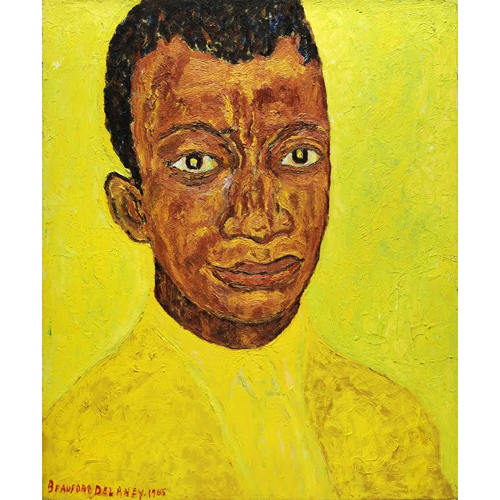
ACQUISITION: Beauford Delaney

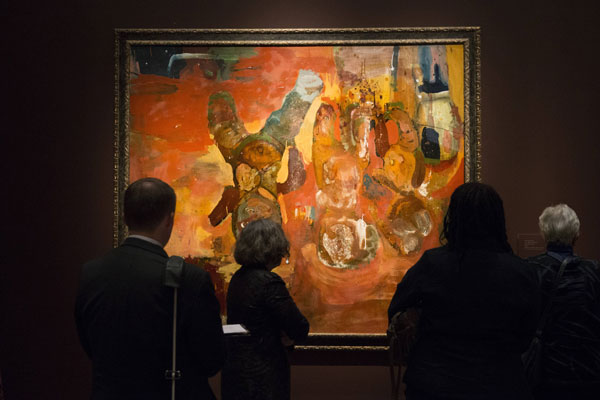
Beauford Delaney, Portrait of James Baldwin, oil on canvas. Image via pilotonline.com, courtesy of The Chrysler Museum of Art. 

Chrysler Museum acquires painting that celebrates 2 African American icons

Text | Denise M. Watson for The Virginian-Pilot
Published | Wednesday, February 3, 2016

Beauford Delaney has often been described as an elusive artist, but he is present in his paintings: intense and explosive, his images crazy with rich colors, layers and shadow.

The artist, who died in a mental hospital in 1979, never saw financial success in a career that emerged in the late Harlem Renaissance era of the 1930s. But his talent attracted the friendships of artists like Georgia O’Keeffe and writer James Baldwin, who saw Delaney as a mentor.

Delaney wouldn’t be recognized as an important artist until years after his death. Alex Mann, the Brock Curator of American Art at the Chrysler Museum of Art, recently acquired one of Delaney’s most iconic paintings for the Chrysler.

Delaney’s 1965 portrait of Baldwin is now on display and will be featured as the Chrysler kicks off its African American art programming for Black History month with a gallery talk this Sunday.

“We are always looking for great pictures to add to the Chrysler collection, and I’ve been studying African American artists who were overlooked during their lifetime but now we see their work and say, “ ‘Wow, this is fantastic,’ ” Mann said.

“Anything that has a good story within it is important to me, and this picture is amazing and it’s perfect for the museum.”


Read complete story here.


Friday, February 5, 2016

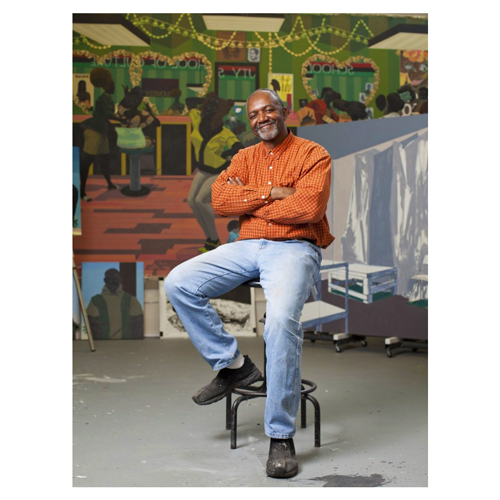
PAINTING THE TOWNS: Kerry James Marshall Set For Major Three-City Retrospective


Text | Hedy Weiss for The Chicago Sun-Times
Published | January 24, 2016


In many ways, Chicago-based artist Kerry James Marshall has depicted the African American experience on canvas much as playwright August Wilson chronicled it for the theater. And beginning this spring, Marshall’s work will be seen in its first retrospective exhibition, “KJM: Mastry,” which will open at the Museum of Contemporary Art in Chicago (April 23 – Sept. 25, 2016), move on to New York’s Metropolitan Museum of Art (Oct. 25, 2016 – Jan. 29, 2017), and finally be on display at the Museum of Contemporary Art Los Angeles (March 21 – July 2, 2017).

Considered one of America’s greatest living painters, Marshall (who lives in Bronzeville with his wife, actress Cheryl Lynn Bruce) has worked at capturing the African-American experience for more than three decades, creating large-scale interiors, landscapes, and portraits that suggest narratives of African-American history from slave ships to contemporary culture. In the process, he has drawn on his deep knowledge of art history – from the Renaissance to 20th-century abstraction, making such additional sources as the comic book and the muralist tradition part of the mix. The result is a wide range of intimate scenes of black middle-class life, painted in vibrant color and with detailed patterning.

The exhibition, which will include about 70 works, will focus on Marshall’s paintings – from his seminal statement in “Portrait of the Artist as a Shadow of His Former Self” (1980), to his most recent explorations of African-American history. Organized in broadly chronological order, the exhibition will consider the dominant themes in his work: History painting, landscape, portraiture, the nude, religion, and abstraction. A selection of drawings, and works of related media such as photography, video, and sculpture, also will be on view.

Read complete article here


Tuesday, February 2, 2016

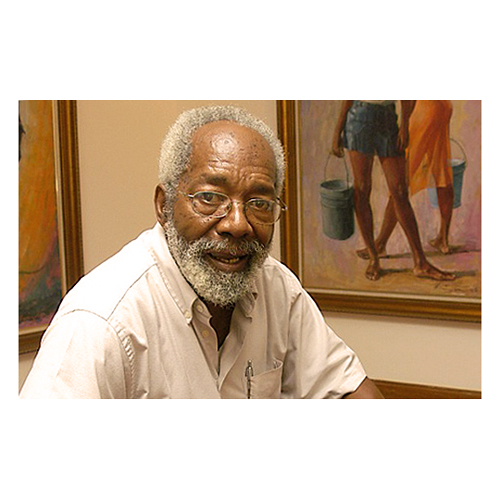
TRANSITION: Barrington Watson (1931 - 2016)


“[Jamaicans] should be more secure in our position in the world of culture. We should be taking all the art that is produced here all over the world."  ~ Barrington Watson


Tuesday, September 29, 2015

SNAP DECISION: LaToya Ruby Frazier Receives Prestigious MacArthur Fellowship Award


The MacArthur Foundation has announced 24 fellows for its 2015 grant awards, among them is photographer and video artist LaToya Ruby Frazier.


“A teacher at the School of the Art Institute of Chicago, LaToya Ruby Frazier uses the language of documentary filmmaking and photography to explore social inequality, race, and class. 

In her best-known work, 'The Notion of Family,' Frazier photographs herself along with her mother and grandmother in their hometown of Braddock, Pennsylvania. The series depicts intergenerational relationships in the setting of a town facing neglect, high unemployment, and economic decline caused by the closure of a local steel mill. 'The Notion of Family' was published as a book by Aperture in 2014, and it was awarded the 2015 Infinity Award for Best Publication by the International Center of Photography.”


Click here to read more.


Monday, September 28, 2015

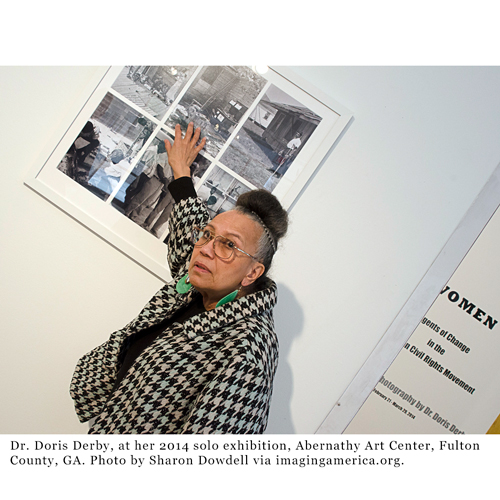
ANNOUNCEMENT: Doris A. Derby to Donate Civil Rights Photograph to University of Alabama During Exhibit Opening


Via uanews.ua.edu:


Dr. Doris A. Derby, a documentary photographer and civil rights activist, will donate a historic photograph from the civil rights era to The University of Alabama during the opening reception of an exhibit featuring her photographs.

The exhibit, “Fertile Ground: The Civil Rights Movement and Its Legacy in the Mississippi Delta,” will be displayed Oct. 2-30 at The University of Alabama Gallery in the Dinah Washington Cultural Arts Center in downtown Tuscaloosa.

The opening reception will held Friday, Oct. 2 from 5:30 to 7:30 p.m. at the gallery, during which Derby will also present an artist’s talk. Both the exhibit and reception are free and open to the public.

Derby’s donated photograph will become part of the Paul R. Jones Collection of American Art at UA, one of the largest collections of African-American art in the world.  Paul Jones donated the collection to UA in 2008. He died in 2010.
“Paul saw some of my photographs before he died, and he wanted to purchase some of them for his collection,” Derby said. “The photograph I’m donating is one of the ones he had selected. It was just meant to be in the collection.”


Click here to read complete story.


Sunday, September 27, 2015

UP FROM THE ASHES: Peggy Cooper Cafritz


The Washington Post reports: "Six years after a devastating fire, Peggy Cooper Cafritz puts the finishing touches a Dupont Circle condo filled with provocative art." Story by Marcia Davis, photographs by April Greer.


Click here to read full story.


Saturday, September 5, 2015

APPOINTED: Franklin Sirmans

Franklin Sirmans in 2012. Photo from BlackArtistNews archive. 
Franklin Sirmans named director of the Pérez Art Museum Miami: “A museum is not only a place unto itself”

Text | M. H. Miller for ARTnews.com
Published | September 4, 2015

This week, Franklin Sirmans was named the director of the Pérez Art Museum in Miami. The museum, which opened in 1984, finished a massive renovation project in 2013, with a new building designed by Swiss architects Herzog and de Meuron. Sirmans, currently the curator of contemporary art at the Los Angeles County Museum, will start his directorship next month. He’s been quite in demand over the last decade, having worked previously as a curator of modern and contemporary art at the Menil Collection in Houston, as well as serving as a curatorial advisor for MoMA PS1. Among the many blockbuster shows he’s organized is last year’s excellent Prospect triennial in New Orleans. We reached Sirmans by phone Friday morning. He had flown to Miami for a few days, and had just met with the Pérez staff.
I guess to begin, what are some of your goals as the director of the Pérez?

Well, I start in, like, a month and a half. I think first and foremost—and it’s not a long-term goal—but first is to really just absorb the archive, and to absorb the things that have happened here, from opening in 1984, to becoming a collecting museum in 1996, and now with this amazing building that’s just been open not even two years yet. So that’s the first thing. Just absorb it all, and get a deeper sense of the foundation of where the museum comes from so we understand where we’re going. Of course that entails doing a lot of talking to people and working with Tobias Ostrander, our chief curator, and thinking through those things. That’s the first goal.

Then I guess it becomes more about long-term development. I think it’s safe to say, with the building done—and it’s gorgeous and it functions—to think about ways in which you can really highlight it. It sits right on Museum Park, and you have this great meeting place, where people want to come, and want to run into people, and hopefully see something that is not only entertaining but potentially makes people think and have different experiences that are triggered by art and ideas.

Los Angeles, where you’ve been based for a while, is a kind of endlessly aspirational city, and people are constantly comparing it to something else, usually New York. L.A. is either the next New York, or it was the original New York, or whatever. So, with this in mind, how do you think Miami compares to Los Angeles?

Well, I don’t know. Two very different cities, but with a lot of similarities. I think people have applied the “is it going to be the next New York” thing in the same way [to Miami] as in L.A. We sort of have these old institutions—you think of New York, you think of Boston, and we’re talking about hundreds of years of history. But L.A., one of the cool things about working in L.A., and being a part of that, is that LACMA has only been there since 1965. So you have this incredibly fertile backdrop. You have John Baldessari right there, you have Ed Ruscha right there, telling you how they were able to stay in Los Angeles in the ’60s and make art. So there’s that very direct, primary relationship.

And here, this institution, we’re only talking about the mid-’80s. It’s another young, fast-moving place. That is, I think, a really exciting opportunity, especially to think about this place and its geographic location between North and South America, and part of the Caribbean. Having that as a backdrop is pretty amazing.

In an interview you gave with the New York Times this week, you said something interesting about the curator in the 21st century—that just being somebody who puts together shows isn’t the case anymore, and all curators are also fundraisers as well. I know you haven’t started your role as director yet, but I’m curious if you have any thoughts as to how the role of the museum director has changed as well?

I feel so fortunate having worked for [LACMA’s director] Michael Govan and having known him and seen the way he worked. And then working for someone who’s really different but also passionate—Joseph Helfenstein [the director of the Menil Collection]. So I think that the position—of course speaking from a detached sense—is more of a place where we consider what it means to be a director from the inside and the outside. And I guess that means there was a time, perhaps similar for curators, where directors could think solely about what happened inside the institution. And things like education, things like programs that happen at non-regular open hours weren’t so important.

And there were questions. How does performance play into that? How does public sculpture play into that? How does the museum work as a place that is sort of the nexus for many different kinds of institutions? Because artists are so fertile in terms of creativity and so interdisciplinary, how do we use the museum to talk about those things so we can crisscross with science, with music, with education? All of those things play a role now. And the museum can be that place where it all comes together. And I think the position involves putting forth a multidisciplinary view, like how our best artists, or the artists we admire, push ideas to new boundaries and get people to think in different ways. I think that the director has potentially become more a part of that very open process. At least from my vantage point. I think about directors I’ve seen working—I think of Thelma Golden and what she’s done with the Studio Museum. I think a museum is not only a place unto itself, it’s a place that is important to a community as a whole, and it has become even more important.


Monday, August 31, 2015

APPOINTED: Janet Dees

Janet Dees photographed by Kate Russell. Image via newcity.com.
Contemporary art expert joins curatorial team of Northwestern University’s Block Museum of Art

Text | Peter Kotecki for The Daily Northwestern
Published August 27, 2015

Contemporary art expert Janet Dees will join Northwestern’s Block Museum of Art this fall as a curator.

Dees, who joins the museum Sept. 21, will focus on modern and contemporary art with a global perspective, said Kathleen Bickford Berzock, associate director of curatorial affairs at Block. The new curator will work with international, diasporic, colonial and postcolonial art, Berzock said.

Dees said she is excited to come to NU and looks forward to working with the museum staff.

“The opportunity to work at a museum within the context of a research university is very exciting to me, and the opportunity to connect with faculty and students across disciplines, and the ability to really slow down and dig deeper in the kinds of projects that I’ll be proposing,” she said.

Berzock said Dees, a PhD candidate in 18th-20th century American art history at the University of Delaware, is a great fit for the curator position because of her training in contemporary and American art.

“She also has a strong background with modern art, but she has always approached that from multiple perspectives,” Berzock added.

Throughout her career, Dees has worked with African, African American, Native American and Latin American artists to weave their diasporas into the study of modern and contemporary art, Berzock said.

“Those are all really important strengths for the program that we have here at the Block and (Dees) has specific kinds of expertise that complement the expertise on site already,” she said.

Dees is coming to NU from SITE Santa Fe, a contemporary art organization. In Santa Fe, Dees was part of a team that organized “SITElines: New Perspectives on the Art of the Americas,” a Pan-American biennial exhibition series on contemporary art.

“(Dees’) work specifically at SITE Santa Fe has been very important, both because she has worked a lot with living artists … and also because she has really actualized the kind of global approach that we are committed to,” Berzock said.

Berzock said Dees will join two ongoing projects upon assuming her position. The first is an exhibition on the intersection of modernity and Africa produced by French-Algerian contemporary artist Kader Attia, artist-in-residence at Block for the upcoming academic year. For the second, Dees will be the on-site curator of an exhibition on the work of the late photographer and performance artist Tseng Kwong Chi, opening in Fall 2016.

Berzock said Dees will also work on getting to know NU and its neighboring region to propose exhibition projects of her own to Block.

As part of her engagement with the campus and its surroundings, Dees said she is interested in researching art of the African diaspora at the Melville J. Herskovits Library of African Studies at NU — the largest Africana collection outside the African continent — and learning about the landscape of the Chicago area.

“I think it’s important to get an understanding of the institution and the wider community to see what the needs are, and to see what resonates within that particular context as I think about how I would shape an exhibition program,” Dees said.

Huey Copeland, art history professor and associate dean for academic affairs at The Graduate School, said Dees’ work has repeatedly shown her commitment to new cultural perspectives that remap art and culture across the Americas.

“(Dees) will not only complement cutting-edge engagements with the arts on campus, but also challenge all of us to think more expansively about how questions of colonialism, geography and power at once shape and deform our experiences of the visual world,” Copeland said in a news release.


Wednesday, July 15, 2015

OP ED: What Does Cosby Art Really Show?

"Hanging Out to Dry" by Erika Ranee Cosby, from the Bill and Camille Cosby collection at the Smithsonian's National Museum of African Art in Washington.(Evan Vucci / AP).
 Image via chicagotribune.com.
Why Smithsonian's Cosby exhibit is still a bad idea
Text | Philip Kennicott for the Washington Post
Published | July 14, 2015
Inside the Castle, it looks as if Smithsonian officials are standing on principle: An exhibition of art owned by Bill and Camille Cosby, on display at the National Museum of African Art, is not an endorsement of Cosby's character, behavior or reputation. This is about the art, and the artists, not the collector, who is accused of sexually assaulting more than 40 women and who acknowledged in a 2005 legal deposition that he intended to give drugs to women he wanted to have sex with.
Although Cosby's name appears dozens of times throughout the exhibition, the Castle will not take it down before the scheduled end of its run in January 2016. To do otherwise, they say, would set a bad precedent and open the institution to public pressure from interest groups far and wide who disagree with or dislike anything on display.

"Exhibits have an intellectual product," said Richard Kurin, the Smithsonian's undersecretary for history, art and culture. "That's why we put them up. So when it's up, we are loath to take them down."
It's not a bad principle, and it shows that the Smithsonian learned something from its last major exhibition controversy, the decision by then-Smithsonian Secretary Wayne Clough to censor a 2011 exhibition of gay and lesbian portraiture at the National Portrait Gallery. That blunder opened the Smithsonian to furious criticism, demonstrated its willingness to capitulate to homophobic slander and did real violence to one of the best and most critically well-received exhibitions it had mounted in a decade or more.
But although Kurin says the institution's leadership learned a valuable lesson in 2011, it hasn't learned when this newfound wisdom applies. Although the Castle developed guidelines to address the issue of tampering with or censoring exhibitions, it seems unaware that for every rule there are exceptions. Cosby isn't guilty of insider trading, or securities fraud, or driving drunk; he stands accused of raping or having inappropriate sexual contact with dozens of women — allegations he has denied. The exhibition was paid for by, and celebrates in myriad ways small and large, a man who, many women alleged, not only sexually assaulted them but in some cases sought to silence them. It is called "Conversations."
This isn't about borrowing art from an unsavory rich guy; it's about hosting an exhibition that celebrates the family life and character — "the personal importance of family to the collectors cannot be overstated," reads one exhibition text — of a married man who by his own admission acquired Quaaludes to give to women he wanted to have sex with.
And so the big crisis of the last Smithsonian secretary leads directly to the first crisis of the new one, David Skorton, who took over the institution at the beginning of this month. And once again, the Smithsonian looks desperately out of touch. When Clough censored the gay-and-lesbian-themed exhibition, "Hide/Seek," American society was in the middle of an astonishingly rapid change of heart about anti-gay prejudice; Clough's blunder will probably be remembered as the last great capitulation in the dying culture wars over sexual identity and expression.
Now the Smithsonian has chosen to stand behind an exhibition celebrating a collector who personifies the nexus of power, wealth and celebrity that allows too many men of high social standing to treat women with violence and impunity. Once again, the culture is rapidly shifting, and the Smithsonian seems to have no idea how its support of the Cosby exhibition looks to the outside world. The public discourse over rape today is different than it was five or 10 years ago. Today, women, and society at large, not only seek to utterly eradicate it but also to shame those who deny it or issue apologetics.
"Conversations" was a bad idea for an exhibition in the first place, and it violated widely held ethical standards in the museum world that warn against displaying the art of living collectors unless that art has been given or bequeathed to the museum. Although the Smithsonian says that it will acknowledge the Cosby controversy with an informational sign, it hasn't yet done so. And so the exhibition remains an exercise in hagiography, full of soft-focus and flattering images of the Cosbys, a painting by their daughter and multiple citations from the couple explaining their love of art.
I revisited the exhibition to remind myself how visible Cosby is in it. After 40 appearances of his name, I stopped counting. Worse, the institution has played down the financial relationship between the Cosbys — who donated more than $700,000 to the African Art Museum — and the institution. Although the Smithsonian asserts that the Cosbys' underwriting of the museum was "publicly available information," a museum spokesman didn't divulge the information when asked a direct question by The Post in an email exchange last November. Only later did it acknowledge this connection to The Post and The Associated Press.
It's understandable that a large cultural institution is wary of being swayed by sudden moves in public opinion. But rape isn't like other crimes, and it is directly related to the history of art and the use of art to defend male privilege. It has been 40 years since Susan Brownmiller published "Against Our Will," which argued that rape "is nothing more or less than a conscious process of intimidation by which all men keep all women in a state of fear." That might seem hyperbolic unless you've spent time in an art gallery, where rape is routinely glorified and eroticized. Art is so enslaved to rape culture that it has its own tropes for discrediting women who have been raped: Just look at Rembrandt's painting of "Joseph Accused by Potiphar's Wife," recounting the false accusation of rape against the biblical patriarch. It is one of perhaps a dozen such images in the National Gallery of Art.
Rape is already inescapable in art museums, which is why the museum should be more sensitive to its Cosby connections. No matter what the Smithsonian asserts, the Cosby exhibition is now inextricably tied to women's portrayal of Cosby as a sexual predator. Its casual celebration of patriarchy and traditional female role models will be read in context of women who claim that he allegedly used drugs to incapacitate them. Once you start looking for rape as a subtext, it leaps out at you with a shocking sense of the obvious.
In the popular, representational imagery preferred by the Cosbys — to the virtual exclusion of socially, politically or racially provocative art — women are represented as tortilla makers, flower bearers, sexual objects, faithful mothers or fertility figures. Only one painting lent by the Cosbys, Robert Colescott's 1991 "Death of a Mulatto Woman," directly engages issues of identity, race and femininity in a sophisticated way, and it is wildly ambiguous, seemingly to posit a connection between mixed racial identity and sexual availability or vulnerability.
Rape thrives on silence and on the ability of men to silence women. Sexual abuse of all sorts thrives within the family, where emotional cohesion, obedience and loyalty are all too often deployed to bury abuse in collective silence. The family themes of the Cosby exhibition — an extension of the fictional family-friendly brand that made Cosby wealthy — now look like an elaborate veil cast over the abuses of the patriarch. Was rape ever a topic of conversation in the house?
Why, in the Cosby-owned painting "Homage to 466 Cherry Street," by Eldzier Cortor, does a magazine spill out of a mailbox with what appears to be a mostly naked African-American woman on the cover? And is the title of the magazine, "Artist Digest," a comment on the use of art to mask illicit desire?
Little things, maybe entirely innocent, look different in this context. What to make of a quilt that includes a panel with these words on it: "What about the word no don't you understand?"
At this point, there is no risk of over-psychologizing the exhibition. It never had any substantial content to begin with, but at least now it can be used as a case study in how women are treated in art and how art supports a cultural infrastructure of contempt, dehumanization and misogyny. Art objectifies women; it allows us to ogle them under the pretense of purely aesthetic pleasure; it defines them romantically and sentimentally as servants and helpmates to men; it punishes them for transgressing their proper role.
If you invest in these images, they will grow in value, especially if you can persuade a respectable museum to display them. And as they grow in value, so, too, your stature will grow. And who would believe a woman's testimony next to that of a successful art collector?