Showing posts with label Radcliffe Bailey. Show all posts

Monday, April 25, 2016

BOSTON: Radcliffe Bailey

Radcliffe Bailey, Notes from Tervuren, 2014, gouache, collage, and ink on sheet music, 22 3/8 x 18 7/8 x 1 1/2 inches (framed).
Image via cacno.org.

Being Imperceptible
April 1 - May 28, 2016

SAMSØÑ  
450 Harrison Avenue
Boston, MA

Text by Kevin Sipp via cacno.org:

RADCLIFFE BAILEY'S work collectively builds an alternate history of transatlantic slave narratives, accounts and histories of culture, science, and art making; histories that ask the perennial ‘what if’ questions that haunt human history. How we process stolen legacies, devalued humans, unrecognized aesthetic practices and balance their retelling through the lens of modernism and post modernist angst will keep all, us (and them) busy for years to come. No matter the weight of the subject, Bailey finds a way to bring the wonder of freedom to the table. His aesthetic drapetomania pushing our eyes forward, past nostalgia into two and three-dimensional stagings that interrogate the past and present all at once. West African ritual mark making, Dadaist and Surrealist technique, the ghosts of Negritude and Harlem Renaissance aspirations, Expressionist abstractions coupled with cosmic and free jazz influences, folk and funk art, revising stories, retention and contemporary innovations all maneuvered into place; a well staged ensemble propelling conversations around the valuation and re-evaluation of African minds, bodies, and myths.

Radcliffe Bailey's luminous series Notes from Tervuren is a fine example of his unconventional historical narration. Paint applied like sacrificial fluids amid an orchestra of collaged floating signs and sacred symbols wrapped around collaged totems layered and lacquered on aged and weathered sheet music. In his book, Bluetopia: Visions of the Future and Revisions of the Past in the, works of Sun Ra, Duke Ellington and Anthony Braxton, Graham Lock describes music as a complementary form of history and a gateway to other realities. This idea argues music, as a creative vehicle, helped Africans in the Diaspora envision a promised land of the future and recall the memory of a promised land lost in past. The figures in the Tervuren series move, animated by centuries of waiting. Ki-Kongo Nkisi language and culture co-mingles with representations of Mende womanhood in the watery dream world of Olokun spirituality. These artifacts provide a dream of agency and autonomy, visualized as aquatic movements spanning the expansive journey, that Middle Passage, from Mythic Africa to present Diaspora through art world stylisms. Ancestral objects surrounded by chaotic rainbows echo the twilight colors of coming night and dawning day, spirits of memory evoking griots dancing mambos, ghost singers and tale tellers.

Art is one of the ways we humans keep our history, our community, our faith, our prophetic and speculative hopes alive. Art keeps the voice of our love and hate. It speaks to the blues of our glass hearts breaking. It speaks to the piecing of our Osiris selves back together. It is how we give voice to our gods and have them sign their names. It is the hoodoo child coming of age in all of us, fighting to keep a consumed, magical world populated by living myth and ever present wonder. It simultaneously keeps and transforms the narrative of history. Radcliffe Bailey’s art is an heir to a Pan African, Pan Aesthetic patchwork high culture that has consistently carried the weight of art's communal purpose. Let us all celebrate this griot's song.

Radcliffe Bailey was born in Bridgeton, New Jersey in 1968, and grew up in Atlanta, Georgia, where he currently lives and works. Bailey received a B.F.A. in 1991 from The Atlanta College of Art. His past exhibitions include, Memory as Medicine, High Museum of Art, Atlanta (2011), which traveled to the Davis Museum and Cultural Center, Wellesley College (Wellesley, MA), and the McNay Art Museum (San Antonio, TX). New/Now: Radcliffe Bailey, New Britain Museum of American Art, New Britain, CT (2004), Neo-HooDoo, curated by Franklin Sirmans and organized by The Menil Collection (Houston, TX) at the Miami Art Museum, (Miami, FL 2009), and traveled to MoMA P.S.1, (NY, NY, 2009). Bailey’s work is in the collections of the Metropolitan Museum of Art (NY. NY), the Smithsonian Museum of American Art (Washington, D.C.), the Corcoran Gallery of Art (Washington, D.C.), the Museum of Fine Arts (Houston, TX), the Nelson-Atkins Museum of Art (Kansas City, MO) and the High Museum of Art (Atlanta, GA), among others.




Wednesday, April 3, 2013

PHILADELPHIA: Radcliffe Bailey

Radcliffe BaileyNest, 2012, steel, piano keys, and taxidermied bird, 80 x 80 x 30 inches. Image courtesy of Bridgette Mayer Gallery.

Notes
April 3 – April 27, 2013
Opening reception: Friday, April 5, 2013, 6 - 8:30pm

709 Walnut Street, 1st Floor
Philadelphia, PA

Bridgette Mayer Gallery is pleased to announce its premier solo exhibition of work by artist Radcliffe Bailey. The exhibition, entitled Notes, will feature new sculptures in steel, bronze, porcelain and wood, as well as paintings and works on paper. As installations and spatial complexities are an interest of the artist, Bailey will pay special attention to the architecture of the gallery space for his overall installation.

Radcliffe Bailey’s work layers family histories with historical motifs, using antique family portraits, personal objects and musical references.  In the artist’s words, “My art is about history and the mystery of history. Scientists, preachers, tricksters; they are my muses. I am also very much influenced by musicians, poets, inventers, and practitioners; by people like George Washington Carver and the recently-deceased Charleston blacksmith, Philip Simmons.”  African and African-American themes are common in Bailey’s work. The nautical journey from one land to another- mainly that of African slaves to the new world - can be seen in his series of works on paper that will be on view at the gallery. Carved African figures look out onto colorful expanses of water with musical scores behind them as their night sky. Heavily influenced by music (jazz and hip-hop specifically), Bailey takes cues from the styles in his painting and sculpting practice, piecing together different mediums and imagery to create a harmonious work. Although Bailey’s work pulls from the diverse histories of the United States, art, music, and the world, his work is still meant for the general public. The goal of Bailey’s work is to be “sincere, complex and honest” and to perpetuate conversations about anything from race, to art, to our commonalities as people of this world.

Radcliffe Bailey received his BFA from the Atlanta College of Art in 1991.   He is in the permanent collection of numerous museums including, Metropolitan Museum of Art, New York, Art Institute of Chicago, Chicago, High Museum of Art, Atlanta, GA, Corcoran Gallery of Art, Washington, DC, Smithsonian Institution, Washington,  DC among many others. Bailey has been the recipient of the Gibbes Museum of Art Factor Prize as well as the Johnnie L. Cochran,  Jr. Art Fund,  Inc. Aware for Excellence in the Visual Arts. He has had numerous solo and group exhibitions throughout the United States and abroad including High Museum of Art, Atlanta, GA,  McNay Art Museum, San Antonio, TX,  Jack Shainman  Gallery, New York, NY, Birmingham Museum of Art, Birmingham, AL, New Britain Museum of American Art, New Britain, CT, Tate Liverpool, UK. 


Sunday, August 7, 2011

POSE: Mr. and Mrs. Radcliffe Bailey / UPTOWN magazine / June-July 2011

Victoria Rowell and Radcliffe Bailey chilling in front of Bailey's work Cerebral Cavern.

CAPTURED BY RONDA RACHA PENRICE | PHOTO BY DEREK BLANKS

The June/July 2011 issue of UPTOWN magazine features a one page article titled "Radcliffe Bailey Breaks Through" where his wife actress Victoria Rowell "grills the star artist on his work, talent, and ever-increasing popularity." 


INTERVIEW EXCERPT:
VICTORIA ROWELL: What is your impression of the art world today?
RADCLIFFE BAILEY: I don't look to find an impression. My world is my kids, my wife, my parents, my brother, and my friends. The art world is fiction.
ROWELL: Is it open enough?
BAILEY: Uh, it's about as open as the back door.
ROWELL: Is the perception that it's closed and stuffy true?
BAILEY: Sure, but great humanitarians also exist in that world. What we think of art and the art world should not be based on other people's realities.


Read more in the June/July 2011 issue of UPTOWN magazine available on newsstands now!


Sunday, June 26, 2011

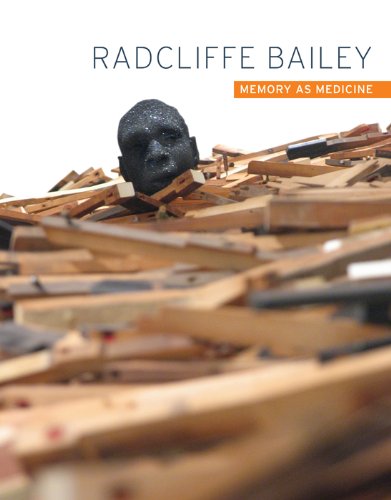
ATLANTA: Radcliffe Bailey - Memory as Medicine / High Museum of Art / June 26 - September 11, 2011

New York Times review link added 07/08/11.
YouTube Video clip added 08/01/11 and 08/12/11.
Opening Gala Photos link added 08/08/11.
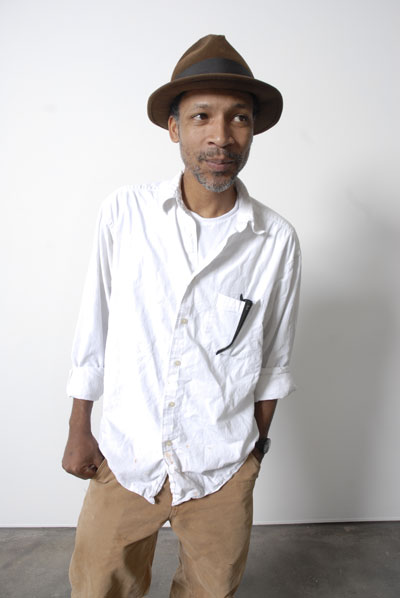
Radcliffe Bailey photographed in 2007 by Joeff Davis for Creative Loafing Atlanta.

High Museum of Art Press Release:


ATLANTA, June 8, 2011 – The High Museum of Art will organize and premiere the most comprehensive presentation of works by Atlanta-based artist Radcliffe Bailey to date. Opening June 26, 2011 Radcliffe Bailey: Memory as Medicine will highlight the artist’s experimentation with diverse media, showcasing sculptures, paintings, installations, works-on-paper, glass works and modified found objects. Comprising 37 works, Memory as Medicine will include new art created for the exhibition as well as works never before seen on public display. The exhibition will also juxtapose Bailey’s work with classic African sculptures from the High’s permanent collection and selected loans to show the influence of African aesthetic practices on the artist’s work.

Radcliffe Bailey: Memory as Medicine is organized by the High Museum of Art and will be on view in Atlanta from June 26 through September 11, 2011. The exhibition is scheduled to travel to the McNay Art Museum, San Antonio (June 6—September 2, 2012), and the Davis Museum and Cultural Center at Wellesley College (February 15—May 6, 2012).

“In this exhibition, visitors will discover Radcliffe’s ability to combine sculpture and painting, two- and three-dimensional forms and grand and intimate scales, creating works of art that are rich in texture, detail, color and – most importantly – meaning,” stated Michael E. Shapiro, the High’s Nancy and Holcombe T. Green, Jr. Director. “The High is pleased to debut this exhibition in Atlanta, underscoring the Museum’s continued commitment to celebrating the nationally recognized talents and legacies of our hometown artists.”

The exhibition will present Bailey’s work in three thematic sections: “Water,” “Blues” and “Blood.” Works included in the “Water” group will feature the artist’s references to the Middle Passage as a site of historical trauma as well as an artistic and spiritual journey. “Blues” will present works that illustrate music as a transcendent art form. “Blood” will feature works focusing on the ideas of ancestry, race, memory, struggle and sacrifice. This section will further explore the artist’s engagement with African sculptures in tandem with his investigation of his own family’s DNA.

In 2006 Bailey traced his maternal ancestry to the Mende people of Sierra Leone. This inspired him to create his most intimate work to date – a miniature drawing of a Mende mask done in ink and coffee on a piece of sheet music framed within a tiny red-velvet-lined, 19th-century tintype case, evoking an heirloom family portrait. This piece will be on view in the exhibition alongside more recent works, including a new sculpture indebted to the materiality and smooth, curvilinear forms of Mende masks, but not their functionality. Repeatedly rubbed with finishing wax in a daily studio ritual, Bailey created a Brancusiesque objet d’art – an inscrutable prop for a contemporary, Neo-Dada-style art world performance.

Other works explore issues of scale. A number of pieces will highlight the artist’s penchant to animate his work with large-scale photographic reproductions of black-and-white prints given to him by his grandmother as well as historical photos he collects, in order to place African Americans at the center of both American and world history. Another new work, “Cleanup II,” is a painted wooden sculpture in the form of an eight-foot-high baseball bat. Bailey comments, “The reason why I made the bat so big was to beat down all the things that I confront. Baseball being one of my first passions, before art, the bat was like my paintbrush. In baseball, the fourth batter that comes up is the cleanup hitter.”

The exhibition will also feature seven sets of “medicine cabinet” sculptures, whose contents include a broad range of culturally charged objects, imagery and raw materials, from indigo powder to tobacco leaves to Georgia red clay. The contents of the cabinets are displayed in deeply recessed shelves protected under reflective, tinted glass, a nod to Kongo minkisi sculptures from central Africa, which contain healing and protective medicine within mirrored packets. These sculptures link the too often disconnected histories of peoples of Africa and the African Diaspora and emphasize collective experiences.

“Radcliffe Bailey’s art is consistently informed by a strong social and historical consciousness, and solidly grounded in family and community. The exhibition combines a rich narrative content with a high-level of abstraction and poetic resonance to explore questions of history and memory,” said Carol Thompson, the High’s Fred and Rita Richman Curator of African Art and curator of the exhibition. “Bailey’s art traces the complex network of his ‘aesthetic DNA’ to create an antidote to cultural and historical amnesia.”

Radcliffe Bailey
Radcliffe Bailey was born in 1968, in Bridgeton, New Jersey. He grew up in Atlanta, earning a bachelor’s degree in fine art from the Atlanta College of Art in 1991. From 2001 to 2006 Bailey taught at the Lamar Dodd School of Art at the University of Georgia. He received a Joan Mitchell Foundation Grant (2004) and was a visiting faculty member at Skowhegan School of Painting and Sculpture (2006). In 2008 he created large-scale glass works as a participant in the Toledo Museum of Art’s Guest Artist Pavilion Project (GAPP). His work is represented in leading museum collections, including the Metropolitan Museum of Art, New York; the Smithsonian Museum of American Art and the Corcoran Gallery of Art, Washington, D.C.; San Francisco Museum of Art; the Museum of Fine Arts, Houston; the Nelson-Atkins Museum of Art, Kansas City; the Art Institute of Chicago; and the High Museum of Art, Atlanta. In 1994 Bailey’s work was included in “The Hale Woodruff Memorial Exhibition” at The Studio Museum in Harlem. In 1996 Bailey gained acclaim for his large-scale mural “Saints,” a commission for Atlanta’s Hartsfield-Jackson International Airport for the 1996 Summer Olympics in Atlanta. “Saints” remains on view, welcoming travelers entering the airport at International Terminal E.

Exhibition Organization and Support
Radcliffe Bailey: Memory as Medicine will be on view at the High Museum of Art from June 26 to September 11, 2011, and is curated by Carol Thompson, the High’s Fred and Rita Richman Curator of African Art, in consultation with managing curator Michael Rooks, the High’s Wieland Family Curator of Modern and Contemporary Art. Radcliffe Bailey: Memory as Medicine is organized by the High Museum of Art, Atlanta. The exhibition has been made possible by the National Endowment for the Arts as part of American Masterpieces: Three Centuries of Artistic Genius. Additional support has been provided by the Ed Bradley Family Foundation, the Lubo Fund, Jack Shainman Gallery, Vicki and John Palmer, Marjorie and Steve Harvey, Mrs. Gary W. Rollins, and members of the Radcliffe Bailey Guild, co-chaired by Vicki and John Palmer, Jay and Arthur Richardson, and Honorary Chair, Honorable Kasim Reed, Mayor of the City of Atlanta.

Catalogue
A full-color, 160-page book will accompany Memory as Medicine, and features essays by Carol Thompson, Michael Rooks, René Paul Barilleaux, Manthia Diawara and Ed Spriggs.


High Museum of Art
The High Museum of Art, founded in 1905 as the Atlanta Art Association, is the leading art museum in the southeastern United States. With more than 12,000 works of art in its permanent collection, the High Museum of Art has an extensive anthology of 19th- and 20th-century American and decorative art; significant holdings of European paintings; a growing collection of African American art; and burgeoning collections of modern and contemporary art, photography and African art. The High is also dedicated to supporting and collecting works by Southern artists and is distinguished as the only major museum in North America to have a curatorial department specifically devoted to the field of folk and self-taught art. The High’s media arts department produces acclaimed annual film series and festivals of foreign, independent and classic cinema. In November 2005 the High opened three new buildings by architect Renzo Piano that more than doubled the Museum’s size, creating a vibrant “village for the arts” at the Woodruff Arts Center in midtown Atlanta. For more information about the High, please visit www.High.org.

The Woodruff Arts Center
The Woodruff Arts Center is ranked among the top four arts center in the nation. The Woodruff is unique in that it combines four visual and performing arts divisions on one campus as one not-for-profit organization. Opening in 1968, the Woodruff Arts Center is home to the Alliance Theatre, the Atlanta Symphony Orchestra, the High Museum of Art and Young Audiences. To learn more about the Woodruff Arts Center, please visit www.woodruffcenter.org.


Thursday, April 21, 2011

NEW YORK: Radcliffe Bailey / "Outer Spaceways" / Jack Shainman Gallery / April 21 - May 21, 2011


RADCLIFFE BAILEY / OUTER SPACEWAYS / APRIL 21 - MAY 21, 2011

Jack Shainman Gallery is pleased to announce Outer Spaceways, a solo exhibition of new works by Radcliffe Bailey. The show includes sculpture, paintings, steel and glass wall-bound pieces, and works on paper. These various elements are strong on their own while working together to create an immersive environment that approaches one cohesive installation. 

Bailey invokes jazz composer, musician, poet and philosopher Sun Ra as an orbital perturbation to his ongoing and ever changing set of interests and focal points. In doing this, Bailey explores a trajectory anchored in ancestral themes and objects that continues on through time and space. Sun Ra’s ability to pull from entire histories of musical sounds and genres, while simultaneously occupying a space in the future characterized by his philosophy of interplanetary travel, mirrors Bailey’s continuous reexamination of ideas relating to journey and movement. Returning to work primarily with steel, glass and wood, the physical process of making the work serve as performative reenactments of craft and familial traditions. 

In Cerebral Cavern, Bailey revisits the cabinet, a consistent trope throughout his work referencing a material space imbued with associations of searching for that which heals - be it food, medicine, or something less tangible. Resting on each shelf are groupings of identical plaster heads that become anonymous in their repetition. Inspired by recent global movements sweeping entire geopolitical regions, the work is to be read from the bottom up. Beginning at its base level, the heads whisper to one another. As the work builds upward, their density increases and ultimately the accumulated heads begin to look outward. Continuing this theme of movement and progression, Bailey uses records, circular planetary forms and musical instruments, including the lid of a baby grand piano, to recreate a solar system of ideas and sounds in Other Worlds Worlds.

A solo traveling exhibition of his work, Memory as Medicine, will open at the High Museum of Art, Atlanta on June 28th, 2011 then travel to the McNay Art Museum, San Antonio, TX. His past exhibitions include, New/Now: Radcliffe Bailey, New Britain Museum of American Art, New Britain, CT, 2004, Neo-HooDoo, organized by The Menil Collection, Houston, TX, at Miami Art Museum, Miami, FL, 2009, and traveled to MoMA P.S.1, Long Island City, NY, 2009. Bailey's work is in the collections of the Metropolitan Museum of Art, New York; the Smithsonian Museum of American Art, Washington, D.C.; The Corcoran Gallery of Art, Washington, D.C.; the Museum of Fine Arts, Houston, TX; the Nelson-Atkins Museum of Art, Kansas City, MO and the High Museum of Art, Atlanta, GA, among others. This will be Bailey’s fifth solo show at the gallery.

The monograph Radcliffe Bailey: Memory as Medicine by Carol Thompson (with contributions by Rene Paul Barilleaux, Manthia Diawara, Michael Rooks and Edward S. Spriggs) will be available in mid-May. The book offers the first mid-career survey of work by the emerging artist.

Gallery hours are Tuesday through Saturday from 10 am to 6 pm. For additional information and photographic material please contact the gallery at info@jackshainman.com.

Location:
Jack Shainman Gallery
513 West 20th St
New York, NY