Showing posts with label Jacolby Satterwhite. Show all posts

Saturday, November 15, 2014

LOS ANGELES: Jacolby Satterwhite

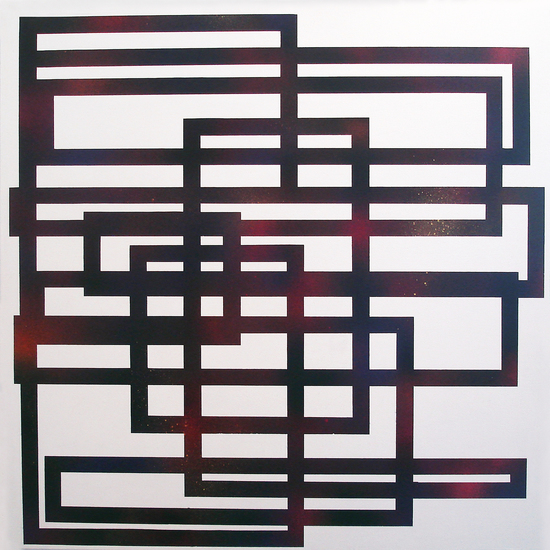
Jacolby Satterwhite, En Plein Air: Abduction I, 2014, C-print in artist frame, 80 x 60 x 3 inches. Edition of 2 plus AP,
How Lovely Is Me Being As I Am
November 15 – December 2014

937 North La Cienega Boulevard
Los Angeles, CA

From oh-wow.com:

OHWOW is pleased to announce Jacolby Satterwhite’s exhibition entitled How Lovely Is Me Being As I Am. With this show, his first at the gallery, the artist presents a narrative series of two-dimensional images, alongside sculpture and video. Satterwhite’s psyche serves as the main conduit for constructing his message; his revisions of media, both with new forms and traditional modes, edify the definition of medium.

Often using his mother’s drawings as a resource (she created thousands of schematics and inventions centered on consumer culture, medicine, sex, astrology, and philosophy), Satterwhite propagates her two-dimensional gestures and contextualizes the related themes. For this exhibition, the artist was inspired by a specific sketch, a sort of self-portrait he discovered among her collection of works, in which she drew seven vessels or architectural structures beneath the handwritten phrase “How lovly is me being as I am.” Satterwhite expanded from this personal reflection, developing a macrocosmos, in response.

While his latest work connects to reality, the visual dialogue also reads something like an extraterrestrial journal, a poetic scape where there is no sense of physical place and no parameters of time. His methods are radical, and the imagery surreal, yet he maintains a visual course of formalist aesthetics and composition. Through performance, video, 3D animation, installation, and sculpture, Satterwhite explores themes of memory, desire, and ritual. He is interested in process as a metanarrative: the narrative between past, present, and future, and how that process relates a broad, shared experience.

Satterwhite’s exhibition serves as a re-exploration of histories, a compound of various art practices, and a queer rendition of phenomenology. He examines and reifies the tension created between intent and interpretation. If minimalist works move to negate their author, the maximum use of visual language in How Lovely Is Me Being As I Am reaches to the other end of the spectrum, beyond the author, presenting a universal expression.

Jacolby Satterwhite (b. 1986, Columbia, SC) lives and works in New York, NY. He received a BFA from Maryland Institute College of Art, and a MFA from the University of Pennsylvania. In 2013 he was a recipient of the Louis Comfort Tiffany Foundation Grant. His work has been included in exhibitions at several prestigious institutions, including the Whitney Museum of American Art, New York, NY; New Museum, New York, NY; Bronx Museum, New York, NY; Walker Art Center, Minneapolis, MN; and Studio Museum in Harlem, New York, NY.


Tuesday, November 11, 2014

CHAPEL HILL: The First Sweet Music

Lonnie Holley, Gabriel's Horn, 2011, mixed media, 67" x 51" x 18" inches. 

Curated by Rich Blint
Featuring the work of David Hammons, Diedra Harris-Kelley, Lonnie Holley, Jayson Keeling and Jacolby Satterwhite

November 13 – December 13, 2014

Opening Reception: Thursday, November 13, 2014, 6-8 pm

The University of North Carolina at Chapel Hill
115 South Columbia Street
Chapel Hill, NC     

From press release:

"Then of a sudden up from the darkness came music. It was human music, but of a wildness and a weirdness that startled the boy as it fluttered and danced across the dull red waters of the swamp. He hesitated, then impelled by some strange power, left the highway and slipped into the forest of the swamp, shrinking, yet following the song hungrily and half forgetting his fear. A harsher, shriller note struck in as of many and ruder voices; but above it flew the first sweet music, birdlike, abandoned, and the boy crept closer."
 --W. E. B. Du Bois, The Quest for the Silver Fleece (1911)

Under the press of enduring asymmetrical arrangements in global life, visual representations of black Atlantic experience in contemporary art have been preoccupied with scenes of historical slight and modern re-castings of the brutal encounter of subjects throughout the diaspora with the habits of power ordering Western society. Through fantastical re-stagings, strategies of inversion, to expressions of radical self-fashioning and other aesthetic conceits, black artists of the New World south have embraced the convention of “imaging back” to empire—a mode of visual address that has largely proven fertile expressive ground. The First Sweet Music, an exhibition of five cross-generational artists working in photography, painting, sculpture, and video, offers flashes of the “black ecstatic” as another way into this fraught and dense visual terrain, presenting works as a way of orienting the viewer’s gaze to the beauty, grace, and true drama that propels and sustains the heroic activity of human living under the vulgarity of protracted subjugation. Echoing Toni Morrison’s invitation in the opening pages of her novel Sula to the insurance collector descending on a struggling community of the newly free, the exhibition is a metaphorical injunction to “stand in the back of The Greater Saint Matthews Church and let the tenor’s voice dress [you] in silk” in order to see and get “closer” to the higher (or lower) “birdlike” frequencies resonant with the forces that are much of the substance of black survival.

Lonnie Holley’s Gabriel’s Horn (2011) is such a heralding. Thoughtfully mixed in media, this sculpture of found and seemingly disparate objects utilizes the biblical and almost didactic clarity of the horn that crowns it to underscore the need to disturb the slumber in American life concerning the arrested and dangerous state of our democratic project. David Hammons’ untitled sculpture of Venetian blinds (circa 1986) answers this call across time, space, and form in his dramatically elegant and emotionally incisive re-purposing of this everyday material signifying sight and blindness in a time of desperate urban neglect punctuated by crime, drug abuse, and the overall dispiriting loss of human life and energy. Diedra Harris-Kelley’s remarkably successful paintings are studies in abstract and figurative rapture. Depicting the artist laboring with the imaginative in her studio (haunted and aided by “demons” and ancestors), and an open-mouthed, wide-eyed figure with horns for hair, these works startle with a mature interiority. Through his photographs, Jayson Keeling pairs well with Harris-Kelley. Thoughts and Visions of a Severed Head (Whisper)(2012), an archival inkjet pigment print of a cast of the artist’s head produced by John Ahearn, is a contemporary riff on the 1853 short story by the Belgian painter, Antonie Wertz, which details the slow, painful death of a beheaded man. Keeling’s appropriated self-portrait contemporizes Wertz’s critique of the rise of capital punishment, relating it to a severed black body politic represented here not simply as the dead and gone, but the quietly powerful, with light radiating from the top of the head and those blinding eyes—to say nothing of the purse of the mouth and spiritual quality of the whisper. Jacolby Satterwhite’s Reifying Desire 6 (2014) once again extends the artist’s studied pursuit of what he identifies as infinite visual possibility. For him, “visual restraint lies within my body of archives ranging from collected movements by myself and other performers, my mother’s drawings...Merging them together into a dense crystal of information results in the reification of process, a concrete time-based visual system bleeding formal, philosophical, and political ideas”. Like the boy in Dubois’ century-year-old novel, these artists are not fearful of the more dissonant notes that attend corporeal “blackness” and seek to draw closer to a visual vocabulary that renders the existentiality, the “inside thing” of life down here below legible and endlessly seductive.


Monday, June 16, 2014

BESTOWED: Tiffany Foundation 2013 Biennial Grants


Steffani Jeminson, Untitled (Projection X), 2013, Inkjet print on acetate, gesso, hardware, and custom panel, 24 x 36 x 1 1/2 inches. Image via louistiffanyfoundation.org.
The Louis Comfort Tiffany Foundation disburses $600,000 in awards to American contemporary artists

In June 2014, the Louis Comfort Tiffany Foundation presented thirty unrestricted grants, each in the amount of $20,000, to American artists working in painting, drawing, sculpture, installation, photography, video, craft and multimedia. Recipients were chosen from a poll of 137 nominees proposed by the Foundation’s trustees, artists, critics, and museum professionals throughout the United States. Submissions by the nominees were reviewed by a seven-member jury. Winners were selected for their talent and individual artistic strength. It is the intention of the Foundation to support artists whose work shows promise, but who have not yet received widespread critical acclaim or commercial recognition.

Among the 2013 recipients are:


A full list of winners and online catalogue with images, biographies and streaming video samples is available at:  http://louiscomforttiffanyfoundation.org/

The Foundation has published a full-color 84-page catalogue documenting the award recipients’ work.

Established in 1918, the Louis Comfort Tiffany Foundation remains one of the largest single sources of unrestricted monetary awards to artists. The present Biennial Competition, a format established in 1980, has over the years granted $8,534,00 in awards to 441 artists nationwide.


Monday, February 3, 2014

ON VIEW: GAY

Cacy  Forgenie, Untitled,  2012,  photograph printed on Fuji archival paper. Edition of 10. Courtesy of the artist.  
Curated by Ivan Monforte
February 5 – May 7, 2014

Opening reception: Wednesday, February 5, 2014, 5:00 - 9:00PM

LONGWOOD ARTS PROJECT
Hostos Community College
450 Grand Concourse (at 149th Street)
Bronx, NY

GAY examines the cultural shift that has taken place in identity within the last decade by looking at the production of gay male artists of color from 2003-2013. Through painting, drawing, sculpture, video, performance and text, the artists in the exhibition interrogate, de-construct, embrace and celebrate the gay label. This show contains adult content.


About the Curator: Ivan Monforte was born in 1973 in Merida, Yucatan, Mexico. He is the recipient of a UCLA Arts Council Award, a fellowship to attend the Skowhegan School of Painting and Sculpture, a Lambent Fellowship in the Arts from the Tides Foundation and an Art Matters Foundation grant for research in Samoa. He curated the exhibition I Never Meant to Hurt You at Buzzer Thirty in 2006. Monforte currently resides and works in Harlem where he maintains a studio practice and provides HIV prevention education to gay, bisexual and transgender homeless and runaway adolescents.


Friday, November 9, 2012

NEW YORK: Bigger Than Shadows

Rico Gatson, Untitled (Nat Turner), 2011. Image via Dodge-Gallery.com.
Curated by Rich Blint and Ian Cofre
November 10 - December 22, 2012
Opening Reception: November 10, 2012, 6-8pm

15 Rivington Street
New York,  NY

Bigger Than Shadows is a group exhibition that explores recent work on the black male body that refashions, riffs on, or re-inflects dominant constructions about the figure known as the black male. Black maleness conjures a host of contradictory associations in the American imagination—from questions about historical morality, creative virtuosity, inherent pathology, to notions of outsized masculinity and, paradoxically, the very absence of masculine authority. Bigger Than Shadows aims to clear space for a timely exchange among emerging and established artists about contemporary and future-oriented visual re-presentations of racialized corporeality—of the black male body in the flesh. Participating artists include Derrick Adams, Noah Davis, Rico Gatson, Adler Guerrier, Lyle Ashton Harris, Duron Jackson, Jayson Keeling, Yashua Klos, Deana Lawson, Kambui Olujimi, Ebony G. Patterson, Robert Pruitt, Jacolby Satterwhite and Zachary Fabri.

Duron Jackson will present a new sculpture titled Bones Crusade, 2012, which expands on his previous work on incarceration, surveillance, and the influence and distortionary effects of these systems. Other sculptural works by Rico Gatson and Adler Guerrier draw from multiple references, engaging the urban landscape and its impression on the body through abstractions of language and perception.

The revelatory photographic contributions from Lyle Ashton Harris, Jayson Keeling, and Deana Lawson are documents of subjects that defy immediate categorization. Harris's and Lawson's examinations of Southern subcultures join Keeling, who is working with a bust of his own face cast by John Ahearn, rephotographing the sculpture to draw attention to subtleties of form through distance.

Yashua Klos's constructions are both fragile and monumental, negotiating aspects of identity through fragmentation, collage, and camouflage. Similarly reconstructed, an array of visual styles will be on display including a contribution from The Human Structure Series (2011) by Derrick Adams, an example of Ebony Patterson's Species Series (2011), a new, large-scale drawing by Houston-based artist Robert Pruitt, a quiet and ambiguous figurative painting by Los Angeles-based Noah Davis, new work by Kambui Olujimi, and a virtual, Hieronymus Bosch-esque video tableau titled Country Ball, 1989-2012, by Jacolby Satterwhite that is built from memory rather than morality.

Rich Blint earned his Ph.D. in the Program in American Studies at New York University. His areas of specialty include African-American literature and culture; the literature of the Anglophone Caribbean; as well as racial visuality, media studies, and U.S. popular culture. He is co-editor of a special issue of African American Review on James Baldwin (forthcoming Winter 2013); guest editor of the Winter/Spring 2008 issue of Black Renaissance Noir, a journal of pan-African culture and politics; and has written critically about the work of Wangechi Mutu and Deana Lawson. The recipient of fellowships from the Woodrow Wilson National Fellowship Foundation, the Andrew W. Mellon Foundation, and the C.L.R. James Institute, Rich has taught courses and guest lectured at New York University, Columbia University School of Law, Vassar College, and the Brecht Forum. He serves on the Executive Board of Vanderbilt University’s Issues in Critical Investigation: The African Diaspora and is currently Adjunct Assistant Professor in the Department of Africana, Puerto Rican, and Latino Studies at Hunter College, The City University of New York.

Ian Cofre, a graduate of Columbia University, is an independent curator working primarily with emerging artists. Frequently collaborating with Omar Lopez-Chahoud, recent projects include co-writing "The Art Fair Effect," an essay for the Bronx Museum's Taking AIM!The Business of Being an Artist Today (2011) and co-curating the exhibitions Tracing the Unseen Border (2011) at La MaMa La Galleria and Southern Exposure (2009) at Dumbo Arts Center. Other shows include Behind Closed Doors (2011), a curated solo project by Manuela Viera-Gallo at Y Gallery and The Doubtful Guest (2010) at Kill Devil Hill in Greenpoint, NY. He most recently served as Director of the now-closed Sue Scott Gallery and Studio Manager for Mickalene Thomas before that.