Showing posts with label Elizabeth Alexander. Show all posts

Monday, April 8, 2013

CAPTURED: Milo Bosh and Bob Albert

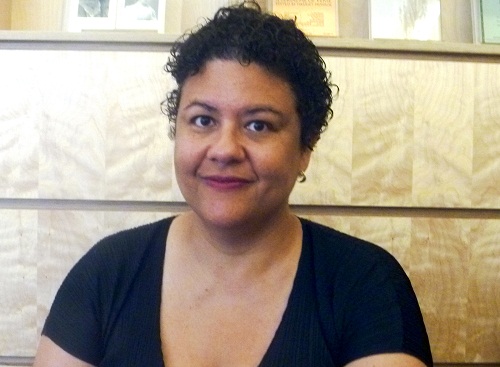
Photograph by Chris Randall via  I Love New Haven Facebook page. © 2013 Chris Randall. All rights reserved.

Photographer Chris Randall of ilovenewhaven.com caught me jumping for joy at the April 5th reception held for Polychromasia, an exhibit of works by the late Ficre Ghebreyesus at ArtSpace in New Haven, CT.

It would be easy to conclude (especially since artist rep and filmmaker Bob Albert stands next to me looking cool as a cucumber) that my exuberance was enhanced by the wine served. But really, truly, sincerely I could not contain my enthusiasm for the vibrant works!

More information regarding the exhibit will be posted here soon. In the meantime check out Chris Randall’s account of the event here.


Photograph by Chris Randall via  I Love New Haven Facebook page. © 2013 Chris Randall. All rights reserved.

Photograph by Chris Randall via  I Love New Haven Facebook page. © 2013 Chris Randall. All rights reserved.


Saturday, March 30, 2013

NEW HAVEN: Ficre Ghebreyesus

Ficre Ghebreyesus, Untitled, circa 2009-2011, oil on canvas, 84 x 72 inches. Image courtesy of Elizabeth Alexander.
Polychromasia
March 30–April 24, 2013
Opening Reception: April 5, 2013

50 Orange Street (corner of Orange & Crown)
New Haven, CT

ArtSpace is delighted to present Ficre Ghebreyesus: Polychromasia. Opening on March 30, 2013, this retrospective exhibition will celebrate the work and life of the late Eritrean-born artist. While his paintings and photographs are in many private collections, this will be the first solo exhibition drawn from his vast body of work.

Polychromasia, or multicolored, aptly describes Ghebreyesus’s work, which is bursting at the seams with chromatic energy, kinetic form, and optical intensity. His paintings, pastels, and photographs bear witness to multitudinous sites of inspiration. Of his work, Ghebreyesus wrote:

…When I paint I am accompanied by dissonances, syncopations, and the ultimate will for life and moral order of goodness.   A trip to the market guaranteed a dazzling range of traditional crafts repeated from one generation to the next without ongoing critical intervention and independent of religious function.  These crafts included a dazzling range of works such as reed baskets and hand-spun, hand-woven embroidered cotton garments in exquisitely-resolved colors.  The caves near my mother’s village are full of prehistoric rock drawings and paintings.  My eyes took in all of this; my painting allowed me finally to process the seemingly dissonant visual information.

Ghebreyesus achieves syncretic brilliance. Framed by Eritrean crafts, textiles and architecture; the polyglot influence of world literature and philosophies; BeBop, modern jazz and polyrhythms of the African diaspora; as well as the masterworks of paintings populating the museums Ghebreyesus frequented, the works that have been selected for Polychromasia offer a survey of the myriad styles, mediums and scales that he worked in over his career. A catalog will feature texts by Anne Higonnet, Key Jo Lee, and Robert F. Thompson, as well as an introduction by Ghebreyesus’ wife, poet and scholar Elizabeth Alexander. The exhibition will feature accompanying events in conjunction with scholars and academic departments from Yale University.

About the Artist:
Ficre Ghebreyesus was born in Asmara, Eritrea. He studied painting at the Art Students’ League and printmaking at the Bob Blackburn Printmaking Workshop, both in New York City.  He also studied at Yale University, where he earned his M.F.A. in 2002 and was awarded the Carol Schlossberg Prize for Excellence in Painting at graduation. Ghebreyesus made his life in New Haven for almost thirty years, where he lived with his wife Elizabeth Alexander and their sons Solomon and Simon.  From 1992–2008, he was the chef/co-owner of the immensely popular Caffe Adulis that brought Eritrean cuisine to New Haven and New York City.  He also worked tirelessly on issues involving Eritrea and its independence.

About the Exhibition Organizer:
Key Jo Lee is a fourth year graduate student pursuing a joint degree in the History of Art and African American Studies. Her dissertation studies materiality and meaning in nineteenth-century African American photographic portraiture and includes a foray into contemporary African American artistic practice and contemporary conservation and restoration practices. She's written several critical essays for emerging artists, including a long-form exhibition essay for the artist Felandus Thames for his September 2012 solo exhibition at the Jenkins Johnson Gallery. Ms. Lee’s other interests include images of and by African diasporic subjects as well as black visual humor, sartorial choice (especially the selective gender bending of 1920s and 1930s-era female performers), and black abstraction. She is a fellow with the Yale Office for Diversity and Equal Opportunity and a Robert E. Steele intern at the Yale University Art Gallery.

About the Events:
April 5, 5:00–7:00 PM: Opening Reception

April 19, 5:00–7:00 PM: An Evening of Music and Poetry, sponsored by the Yale Department of African American Studies. Featuring Yusef Komunyankaa, Tracy K. Smith, Kevin Young, and Aracelis Girmay.

About the Panel Organizer:
Elizabeth Alexander is a poet, essayist, playwright, and teacher. She has published six books of poems including American Sublime (2005), which was one of three finalists for the Pulitzer Prize and was one of the American Library Association’s “Notable Books of the Year.” Her two collections of essays are The Black Interior (2004) and Power and Possibility (2007), and her play, Diva Studies, was produced at the Yale School of Drama. In 2009, she composed and delivered “Praise Song for the Day” for the inauguration of President Barack Obama.  She is the Thomas E. Donnelley Professor of African American Studies and the chair of the African American Studies Department at Yale University.


Friday, September 16, 2011

FIVE: Elizabeth Alexander

“FIVE” is a special feature at BlackArtistNews where five questions are posed to an individual artist, curator, gallerist, collector or art lover. Why five questions? Well, there are five fingers on each hand and artists create with their hands hence one, two, three, four, FIVE. 

Elizabeth Alexander. BlackArtistNews photo. All rights reserved.
Elizabeth Alexander is a builder of words. She frames them into poetic structures that house memory and metaphor. Few Americans were aware of this before January 20, 2009 the day when the award-winning poet and Yale University professor recited "Praise Song for the Day" at the presidential inauguration for Barack Obama. Alexander is also a devoted art lover; her books are cloaked in works by Henry Ossawa Tanner, Elizabeth Catlett and Romare Bearden, an artist she has applauded in poem and prose. While attending yet another inauguration (the Poetry Foundation's new building dedication event in Chicago) Elizabeth Alexander spoke with BlackArtistNews about the "modernist master" who definitely deserves a high "FIVE":

What was the specific circumstance that lead to your initial writings about Romare Bearden’s work?

I lived with Bearden’s work my whole life. He is a cousin by marriage. My great uncle is the painter Charles Alston, who’s a cousin by marriage to Bearden. And so we had an early Bearden watercolor in the house – a painting in the house –one of the bullfighters. And he was always someone who was in my mother’s stories from her childhood. So that is just to say that I knew there were artists who happened to be African American who were really towering giants to me even if the art historical world and the museum world wasn’t paying the kind of attention to them that they subsequently have come to. 

Then when I was in college I started thinking more analytically and learning more about Bearden’s work. [After] the exhibit that was Memory and Metaphor [in 1991] I started really looking at the collages more. And then studying his work pretty much on my own because again Mary Schmidt Campbell had written her dissertation but there wasn’t a lot of material that was available on Bearden in the early and middle 1980’s. And so his work ended up being the generative source for a theory of collage that I wrote about in my dissertation as a way of thinking about hybrid text by African American women in particular and the process of collage as an African American process of self-making and artistic self-making. 

At that point – again college into graduate school – I corresponded with him a little bit. He was a very generous correspondent; I never met him. But he was open. I just sort of found him I think by calling information and calling him in the studio on Canal Street and he talked to me on the telephone! I told him who I was relative to family but it wasn’t like a family connection: It was an artist responding to a young person who cared about making art and who cared about black culture. 

And so in that period he just became not only my favorite artist but more importantly the artist who taught me the most about making other forms of art. And also someone who I just thought was a dazzling and undervalued genius. So it’s been really gratifying over the last – let’s say twenty years in particular – to see the ways that through the Bearden Foundation and through the museum at the National Gallery and though just the changing times, his work has finally started to get the attention that it should have gotten all along.

Do you think that the general public will ever truly understand why Bearden is an important figure in art history?

Well, you know with the show that was just at Michael Rosenfeld [Romare Bearden (1911-1988): COLLAGE, a Centennial Celebration which ran March 26 - May 21, 2011] that closed about a month ago, the review in the [New York Times] sort of said “finally we see that Bearden was a modernist master” and I had a kind of wry response to that because I thought “well, finally you see.” And I hope that other people will take heed of this: this idea that someone – again, at his centennial – is being discovered as the modernist master that he was is…it’s bittersweet. It’s bittersweet. But you know the art world and its exclusions; it’s a pretty powerfully exclusionary world maybe even more so than the poetry world. So I think things have changed but they need to change more.

You wrote this beautiful, beautiful essay on Romare Bearden for the book Something All Our Own: The Grant Hill Collection of African American Art. How did that come about?

Well again, I had been living with this work and thinking about this work for years and years and years and years and years. And so some of the focused hard thinking in my dissertation came to that essay but I was pleased to be able to write about Bearden in the context of family collecting. And of a young person doing this art collecting and just on a level of responding to the sheer beauty and power of the work; you don’t need to know anything fancy to have that kind of visceral response to it. And that this young man – Grant Hill – who’s someone who I’ve known since he was a child, and to see him taking this kind of really serious interest in art is a wonderful thing.

Was he the individual who asked you the write the essay?

Yes.

Is there a living artist whose work and career interests you?

So many; I follow a lot of artists. One of them would be my husband who’s a painter named Ficre Ghebreyesus. I follow very intimately, I’m sure you know Kerry James Marshall’s work…

Un-huh, [a] local guy. That’s right, you lived in Chicago…

I lived in Chicago, yeah. [Kerry was] a friend from before my Chicago days [and] I think a tremendous modern master. A really, really amazing painter and both my husband and Kerry are really painter’s painters. And they are painters devoted to the art of painting and not to say that both of them…I mean that in Kerry’s work he’s doing with the serials, the comic books and you know he has those installations – I like that stuff – but I feel like he is a painter. And in the same way I think Bearden in the collage form was a painter. That virtuosity I think is really extraordinary. And also I think in all of those artists understanding viscerally and kind of brilliantly the sheer power of color. Understanding it as a life force onto itself – many great artists don’t understand that. And so that’s something that I see in common with a lot of that work. And then – I mean again – there are so many others but I would say that Lorna Simpson is someone else who’s work I have felt in conversation with and engaged with for – she’s my contemporary – she started a little bit before me but not much – and so I feel that all of the intellectual concerns that have gone on in African American literary and cultural studies, she’s been working many of those through in her visual artwork. I think also that her aesthetic is very Zen. Everything is there, they’re lush and generous pictures but they’re also very, very elemental and paired down.  And I think of that in contrast to a Kerry James Marshall aesthetic were there are so many things to look at. There are so many codes to read; there’s so much language. And so to in my husband’s painting there is so much language in them. So part of me loves that, but I feel like in Lorna there’s something very cool water.

What’s your take on her video work?

Fantastic! I mean wonderful! And I think of those kind of in a way separate – I mean I know that they come from one artist but I think of them separate from the still images. And I guess maybe the transitional work would be  – a work I love quite a bit – what’s it called? It’s where all the mouths are singing the [same] song…

I know which one you’re talking about but I don't know the title of it.

"Someone to Love?" It’s a [John] Coltrane song… I really love that because I feel that it as a sort of a piece right in front of you that has its interest but then also as a moving image and something also with sound it’s got another set of interests as well. So I particularly love that piece. (Note: The video's title is “Easy to Remember”. View it here. Listen to John Coltrane's recording of "It's Easy to Remember" here.)

What can creative individuals learn by engaging in dialogue (real or imagined) with artists outside their chosen discipline?

Oh, gosh. Well, I think there always comes a point if you’re a very devoted artist of whatever kind that you bump up against the edges of your material. So in the case of a poet that’s words and that doesn’t mean that they’re not always ways to turn over and approach writing the poem, but I feel that when I’m bumping up against the edges to look across to what a dancer is doing or to what a visual artist is doing or what a musician is doing is just… it sort of torques or turns me toward a different way to approach my own work. And sometimes it’s not even explicit. You know, I can’t trace those steps. But I know that it’s looking outside to people doing things that I don’t know how to do. That can bring me back in with new eyes to the work that I do. Also I think that collaboration is a really exciting possibility too. Again, doing everything that in my case I can do with words and then giving it to the painter, giving it to the musician, giving it to the dancer, giving it to the theater artist and say “Okay, now what do you do?” that’s just cool. [Laughs]

Does art matter?

Oh, my goodness we’re dead without it! Really, our souls are. And does that mean the same thing as saying do paintings matter? No, but without the will to beauty something is dead. In the human soul. Can’t kill the will to beauty.


Elizabeth Alexander's latest publication Crave Radiance: New and Selected Poems 1990-2010  (Graywolf Press) features cover art by Alma Thomas.